
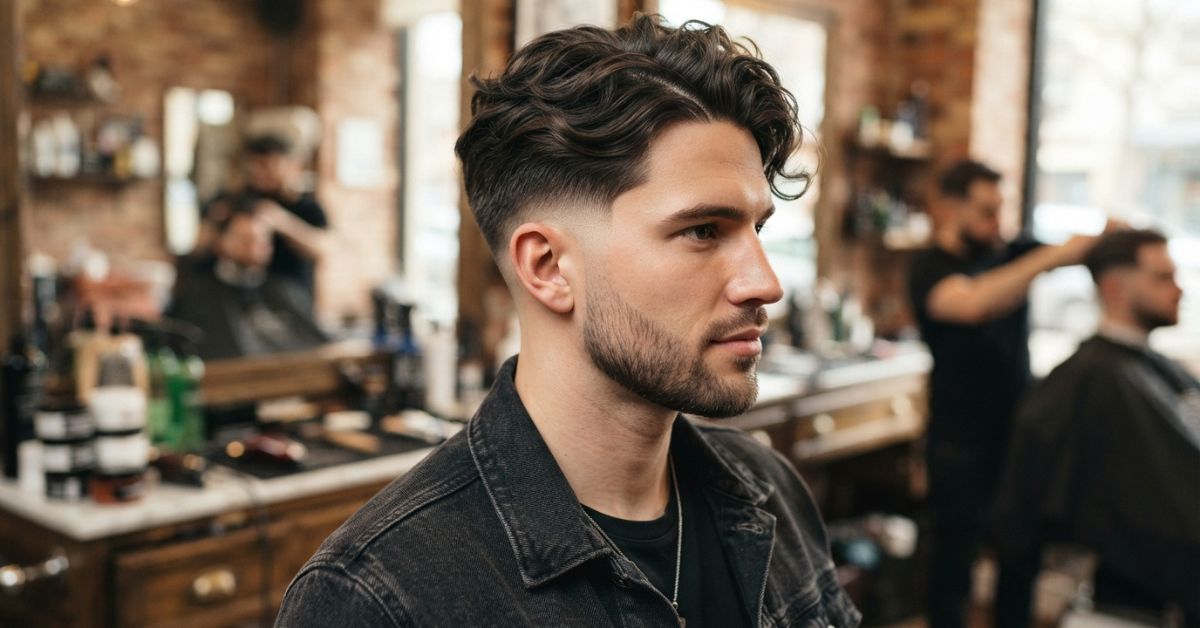
A mid taper fade middle part pairs a clean, gradual fade on the sides with longer hair on top that splits down the center. It looks sharp, feels modern, and works on almost every hair type. If you want a cut that moves easily from the office to the weekend, this is one of the safest bets in men’s grooming right now.
This guide covers ten styles, who they suit, how to style them, and exactly what to tell your barber. You will also find maintenance advice, common mistakes, and quick answers to the questions men ask most.
What Is a Mid Taper Fade Middle Part?
A mid taper fade middle part is a men’s haircut with a mid taper on the sides and back and a center part on top. The taper starts around the temple and fades down toward the ear and neckline. The hair on top stays long enough to fall evenly on both sides of the part.
Two parts make up the look:
- The mid taper fade: Hair gets shorter in a smooth gradient, starting at roughly the middle of the sides. It sits between a low taper (starts near the ear) and a high taper (starts near the temple and crown).
- The middle part: A straight or slightly offset line runs from the front hairline back toward the crown. The hair is directed outward on both sides.
The contrast between short, neat sides and longer top hair is what makes the cut stand out. It frames the eyes and cheekbones without looking harsh.
Why Mid Taper Fade Middle Part Is So Popular in 2026
The cut has stayed in demand because it solves several problems at once. Here is why men keep asking for it:
- Balanced fade: A mid taper is not too bold and not too plain, so it suits most workplaces and social settings.
- Face framing: The center part adds symmetry and draws attention to the eyes.
- Flexible length: You can keep the top short and textured or grow it into longer curtains.
- Natural texture friendly: Straight, wavy, and curly hair all adapt well.
- Social media visibility: Athletes, actors, and musicians have worn variations of it, which keeps it in front of barbers and clients alike.
- Easy to personalize: Add a fringe, an undercut, or a sharper fade without changing the core idea.
It also shows how men’s style has moved toward softer, longer tops paired with precise sides.
Pros and Cons
Pros
- Works with many hair types and face shapes
- Looks polished with very little product
- Easy to grow out, because the top can keep lengthening
- Neat enough for professional settings
- Highly customizable
Cons
- Needs regular barber visits to keep the taper crisp
- Requires enough length on top, usually 3 to 5 inches
- Hair with strong cowlicks at the front may resist a center part
- Takes a few weeks of training if you are used to a side part
- Can emphasize a receding hairline if the part is too rigid
10 Best Mid Taper Fade Middle Part Styles
Classic Middle Part Styles
1. Classic Middle Part Mid Taper
This is the clean, everyday version. The top is about 3 to 4 inches, combed lightly to each side, and the fade stays subtle. Use a matte cream for a natural finish. It suits offices, interviews, and anyone new to the style.
2. Slick Middle Part Mid Taper
Here the top is combed back and down along the part with a firm pomade. The result is smooth, controlled, and a little formal. It works best on straight to slightly wavy hair. Pair it with a skin or low bald fade for extra sharpness.
3. Wet-Look Middle Part Mid Taper
The wet look uses a gel or shine pomade for a glossy finish. Apply it to damp hair and comb through while the product is still workable. It looks great for evenings and events. Avoid it if you want a soft, casual vibe.
Textured Middle Part Styles
4. Textured Middle Part Mid Taper
This version trades shine for movement. Ask for point cutting or light layering on top so the hair separates naturally. Style with sea salt spray and a dry clay. It is a strong choice for medium to thick hair.
5. Messy Middle Part Mid Taper
The messy version looks effortless, though it still needs product. Rough dry the hair, add a small amount of paste, and tousle it with your fingers. The sharp mid taper keeps the look intentional instead of untidy.
Curl and Wave Middle Part Styles
6. Curly Middle Part Mid Taper
Curls give the part a soft, framing effect. Keep the top long enough for curls to form, usually 3 to 5 inches, and let the taper stay clean around them. Use a curl cream on damp hair and diffuse or air dry. Avoid brushing dry curls, which causes frizz.
7. Wavy Middle Part Mid Taper
Waves fall naturally on both sides of the part, which makes this one of the easiest versions to wear. A light mousse or leave-in cream adds shape without weight. This style is popular for the relaxed, surfer-meets-city look.
Detail and Combination Middle Part Styles
8. Middle Part with Fringe Mid Taper
A softer part lets the front fall into a light fringe. This works well for men with high foreheads or longer faces. The fringe should skim the eyebrows, not cover the eyes. Ask your barber to texture the ends for a lighter feel.
9. Undercut Middle Part Mid Taper
An undercut creates a stronger break between the long top and the faded sides. The contrast is bold and modern. It suits men who want the style to stand out, and it pairs well with thick hair, which can otherwise look bulky.
10. Two-Block Middle Part Mid Taper
The two-block cut separates the hair into a longer top block and a much shorter lower block. Combined with a mid taper, it gives a clean, structured shape. It is popular for straight and wavy hair and is easy to refresh with a barber visit every few weeks.
How to Style a Middle Part with a Taper Fade
Follow these steps for a reliable result:
- Wash and towel dry. Leave the hair slightly damp.
- Find your natural part. Comb hair forward, then push it back. The spot where it splits is usually your natural part line.
- Apply a pre-styler. Use sea salt spray or mousse at the roots for lift.
- Blow dry away from the center. Direct the airflow from the roots outward. This trains the hair to fall to both sides.
- Add product. Rub a small amount between your palms and work it through the mid lengths and ends.
- Define the part. Use the tip of a comb or your finger to draw a clean line.
- Set the shape. Finish with a light hold spray if needed.
Which Face Shapes Suit a Middle Part Taper?
Most face shapes can wear it, with small adjustments. Oval, square, and diamond faces suit it best. Round and long faces need tweaks to the volume and fringe, covered in the face shape section below.
How to Choose the Right Style for Your Hair Type
Straight Hair
Straight hair holds a clean part well. Choose the classic, slick, or two-block styles. Add texture with clay if the hair looks flat.
Wavy Hair
Wavy hair gives the part natural movement. The wavy and textured versions need the least effort. Use a light cream to control frizz.
Thick Hair
Thick hair can look heavy. Ask for thinning or point cutting, and consider the undercut version. Use a strong paste or clay to control volume.
Curly Hair
Curly hair works best with moisture and definition. Keep the sides tapered tight and let the curls grow longer on top. Use a curl cream and avoid heavy gels that cause crunch.
Fine Hair
Fine hair needs lift. Choose a shorter top, around 3 inches, and use mousse or a volumizing powder. Avoid heavy pomades that flatten the hair.
Best Mid Taper Fade Middle Part Styles by Face Shape
Oval Face
Most styles work. The classic or textured versions show off balanced proportions.
Round Face
Add height and keep the sides tight. Try the textured or undercut styles, and avoid too much width on top.
Square Face
Soft texture balances a strong jaw. The wavy, messy, or fringe versions work well.
Heart-Shaped Face
A light fringe helps balance a wider forehead. Keep the top a little fuller and the sides neat.
Long Face
Add width, not height. The fringe and wavy versions shorten the face visually. Avoid very tall, slicked-back tops.
Diamond Face
Keep the sides close and add some volume at the forehead. Textured and curly styles soften wide cheekbones.
Rectangular Face
Choose a fringe or a softer part with medium volume. Avoid a high, sharp slick back that stretches the face.
Best Mid Taper Fade Middle Part Styles by Age Group
Teenagers
Teens usually prefer easy, expressive looks. The messy, curly, and wavy versions are good fits and need very little product. School dress codes vary, so check the rules before a bold fade.
Young Men
Men in their twenties and thirties can try the undercut, two-block, and textured styles. These work for both work and nights out.
Professional Men
The classic and slick versions look polished in formal settings. Keep the fade subtle and the top neat, and choose a matte or low-shine finish.
How to Ask Your Barber for a Mid Taper Fade Middle Part
Clear instructions prevent most haircut surprises. Use this simple script:
- Name the cut. Say “mid taper fade with a middle part.”
- State the fade level. Ask for a #1 or #2 at the bottom, blending up to a #3 or #4. Say whether you want a skin fade or a shadow fade.
- Give the top length. Ask for 3 to 5 inches on top, or hold your fingers apart to show it.
- Mention your part. Tell the barber where your hair naturally splits.
- Request texture. Ask for point cutting or light layers.
- Bring photos. A picture removes guesswork.
Tip: Ask the barber to cut with the part in place, so the hair falls naturally.
Mid Taper Fade Middle Part: Video Guide
A short video is useful for seeing how the blend and part look from every angle. When you pick one, look for these points:
- The barber shows the fade from the side, back, and front
- The clipper guard numbers are stated clearly
- The styling steps include blow drying and product amounts
- The hair type matches your own
Search for “mid taper fade middle part tutorial” on YouTube and save one to show your barber.
Common Mid Taper Fade Middle Part Mistakes to Avoid
- Cutting the top too short. Under 2.5 inches rarely holds a part.
- Forcing an unnatural part. Work with your hair growth pattern.
- Using too much product. Heavy product weighs the hair down and looks greasy.
- Skipping touch-ups. A grown-out taper loses its shape fast.
- Wrong taper height. A taper that is too high can look severe on some face shapes.
- Ignoring hair type. Fine hair and curly hair need different products.
- Brushing curls dry. This breaks up the curl pattern.
How to Maintain a Mid Taper Fade Middle Part
Daily Styling
Spend two to five minutes on it. Dry the hair away from the part, add a small amount of product, and define the part line with a comb.
Products That Work Best
- Sea salt spray: Adds grip and texture
- Matte clay or paste: Good for textured and messy looks
- Light pomade or cream: Good for classic and slick styles
- Gel or shine pomade: For the wet look
- Curl cream: For curly and wavy hair
- Mousse: Adds lift for fine hair
Washing Routine
Wash two to four times a week, depending on your scalp. Over-washing strips natural oil. Use a gentle shampoo and a conditioner on the lengths, especially for curly hair.
Touch-Up Frequency
Book a barber visit every 2 to 3 weeks to keep the fade sharp. The top can go 4 to 6 weeks between trims if you are growing it out.
Mid Taper Fade Middle Part vs Other Styles
Middle Part vs Side Part
A middle part is symmetrical and modern. A side part is more traditional and can look more formal. The middle part frames both eyes evenly, while a side part adds asymmetry that suits some hairlines better.
Middle Part vs Slick Back
A slick back pushes all the hair backward and looks bold and formal. A middle part frees the forehead less but looks softer and easier to wear day to day.
Middle Part vs Regular Mid Taper
A regular mid taper can pair with any top style, such as a crop or quiff. Adding a middle part gives it longer hair and a distinct, retro-inspired shape.
Frequently Asked Questions
What is a mid taper fade middle part?
It is a haircut with a gradual mid-height fade on the sides and longer hair on top, parted down the center.
How much hair do I need on top for a middle part?
About 3 to 5 inches works best. Shorter hair may not stay parted.
Does a middle part work with curly hair?
Yes. Curls form a natural frame on both sides, and a tight taper keeps the shape clean.
How do I train my hair to hold a middle part?
Blow dry the hair away from the center every day, and comb it into the part while damp. Most hair adapts within a few weeks.
How often do I need a touch-up for a mid taper fade middle part?
Every 2 to 3 weeks keeps the taper looking fresh.
Is a middle part or side part more professional?
Both work in professional settings. A neat, matte-finished middle part looks modern, while a side part looks more traditional.
What products work best for a middle part?
Sea salt spray, matte clay, light cream, and mousse work well, depending on your hair type.
Does a mid taper work with a middle part?
Yes. The balanced fade supports the longer top and keeps the cut neat.
How do I ask my barber for a middle part taper fade?
Say “mid taper fade with a middle part,” give the top length in inches, and bring a reference photo.
Does a middle part taper fade suit all face shapes?
It suits most, and small changes to length, fringe, and volume fix the rest.
How do I style a middle part at home?
Blow dry away from the part, add a small amount of product, and define the line with a comb.
Is a middle part taper the same as curtains?
Not exactly. Curtains are a longer, looser version of the middle part, while a middle part taper is usually shorter and more structured.
Conclusion
The mid taper fade middle part stays popular because it is clean, flexible, and easy to wear. Whether you choose a classic, textured, curly, or fringe version, the key is matching the cut to your hair type and face shape. Keep the top long enough to hold the part, book regular touch-ups, and bring clear instructions to your barber.
Pick one of the ten styles above, save a reference photo, and book your next appointment with confidence.

Evan Blake is a hair style writer and contributor at Faxhion Styles. He focuses on researching haircuts, styling ideas, hair trends, and practical grooming topics. His goal is to present clear, useful, and reader friendly information that helps audiences explore different styles and make informed choices for their individual hair needs.