

A mid taper fade comb over combines a side-swept top with a clean taper that starts around the middle of the sides. The result is polished without looking overly formal.
It is one of the easiest men’s hairstyles to customize in 2026. You can wear it slick and professional, textured and casual, or soft and low maintenance. Your hair type, face shape, and styling routine determine which version works best.
The key is getting the part, top length, taper placement, and weight balance right.
8 Best Mid Taper Fade Comb Over Styles
These eight styles cover the most useful ways to wear the haircut, from classic and polished to relaxed and textured.
Classic Structured Styles
1. Classic Mid Taper Comb Over
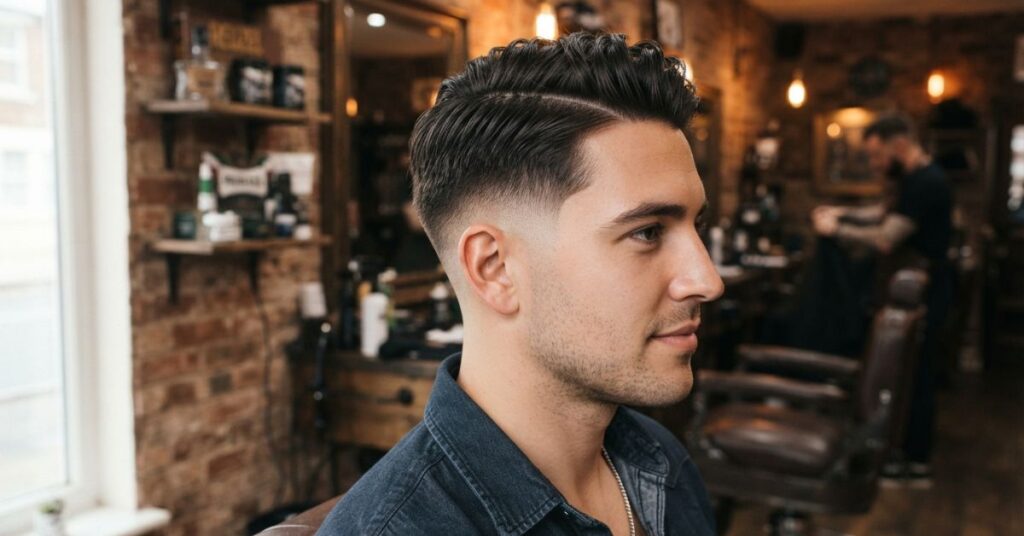
The classic version keeps enough length on top to sweep naturally across a defined side part. The mid taper cleans up the temples and sides while leaving the top as the main focus.
This is a reliable choice for men who want one haircut that works for school, work, dates, and social events.
Best for: Straight or moderately wavy hair, oval and square faces.
Styling tip: Blow-dry the top toward your preferred part before applying a small amount of styling cream or pomade.
2. Slick Comb Over

The slick comb over gives the haircut a sharper, more traditional finish. A medium or strong-hold pomade creates a controlled shape and subtle shine.
Keep the top smooth rather than excessively high. The goal is a clean side sweep, not a dramatic pompadour.
Best for: Straight, fine, or medium-density hair.
Best occasions: Offices, weddings, interviews, dinners, and formal events.
Textured Variations
3. Textured Comb Over
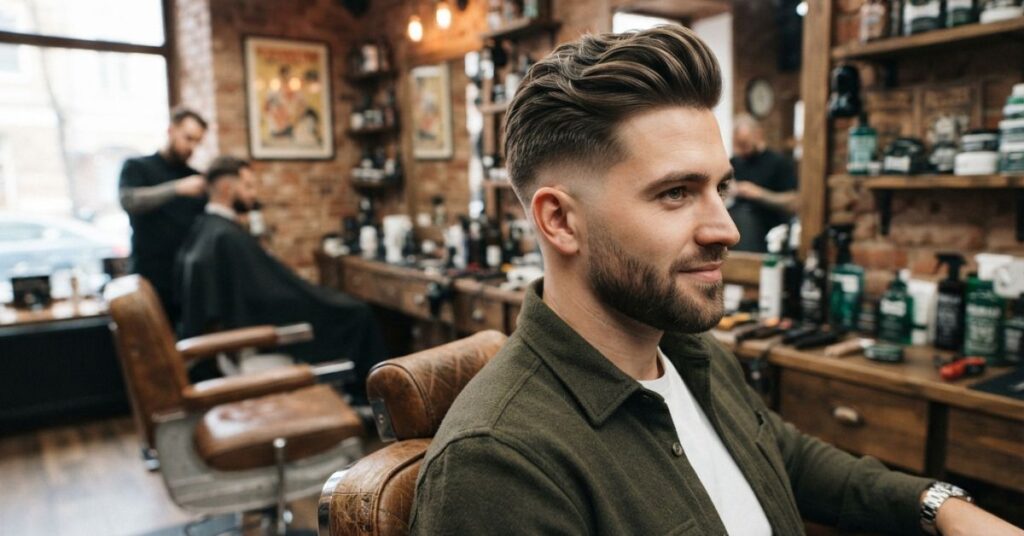
A textured comb over removes some of the stiffness associated with traditional versions. Instead of pressing every strand flat, use a matte product to create separation and movement.
This version is useful if you want a modern haircut that still has a recognizable side part.
Best for: Thick, medium-density, or naturally textured hair.
Styling tip: Use your fingers first, then lightly guide the hair with a comb.
4. Wavy Comb Over
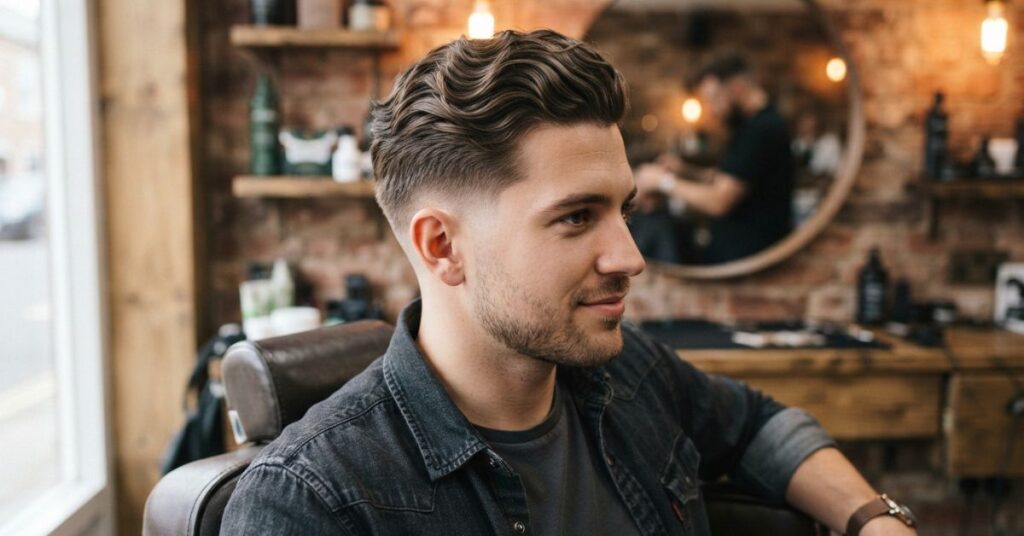
Natural waves can make the comb over look fuller and less rigid. Instead of fighting the wave pattern, work with it.
The mid taper keeps the sides controlled while the wavy top creates movement. This makes the style look modern without requiring heavy product.
Best for: Wavy hair, oval, heart, and square faces.
Styling tip: Apply a lightweight styling cream to damp hair and shape the part while blow-drying.
Detail and Combination Styles
5. Comb Over with Beard

A beard can give the mid taper comb over a stronger overall frame. The hairstyle provides structure at the top, while the beard adds visual weight around the jaw.
Keep the beard neckline and cheek lines clean. An untidy beard can make an otherwise sharp taper look unfinished.
Best for: Oval, square, and diamond faces.
Best finish: Medium-length beard with a neat taper connection.
6. Comb Over with Design

A shaved line or subtle design can make the haircut more distinctive. The design normally sits near the part, temple, or tapered section.
Keep the design simple if you want the haircut to remain versatile. A single clean line often looks more balanced than several complicated patterns.
Best for: Thick or straight hair and men who want a bolder appearance.
7. Undercut Comb Over

An undercut creates stronger separation between the long top and short sides. Compared with a traditional mid taper, it produces more contrast.
The longer top can be swept dramatically across the head. This makes the style more noticeable but also increases the styling commitment.
Best for: Thick, straight hair and high-contrast hairstyles.
Maintenance note: The shorter sides show regrowth quickly, so regular barber visits help preserve the shape.
Low-Maintenance Version
8. Soft Comb Over
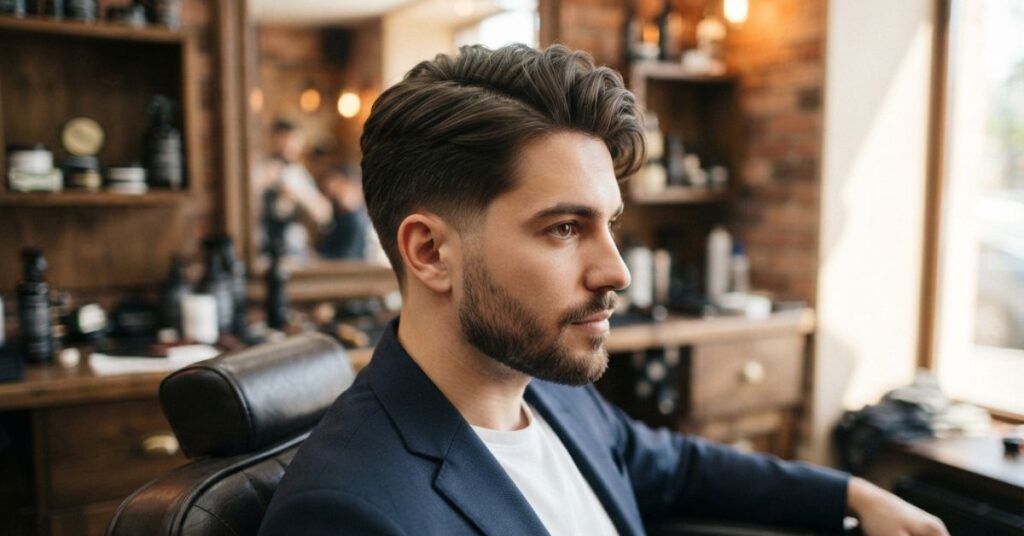
The soft comb over is the easiest version to maintain. Instead of creating a razor-sharp part, you let the hair naturally separate and sweep to one side.
It still has the basic comb over shape, but it does not require perfect lines or heavy styling products.
Best for: Beginners, busy men, and naturally cooperative hair.
Styling tip: Use a small amount of matte cream and let some natural texture remain visible.
Mid Taper Fade Comb Over Explained: What Actually Holds the Part
A mid taper fade comb over has two main components.
The mid taper controls the sides and back. The comb over controls the direction of the longer top hair.
The part itself does not automatically stay in place because of the haircut. It depends on several factors:
- Natural hair growth direction
- Top length
- Hair density
- Blow-drying technique
- Styling product
- Part placement
- Hair texture
A natural part usually looks softer. A hard part creates a more obvious line and requires more precise maintenance.
For most men, keeping around 2 to 4 inches of usable length on top gives enough hair to create a noticeable sweep. The exact length should depend on your texture and desired finish.
Why the Comb Over Keeps Coming Back in 2026
The modern comb over works because it sits between traditional and contemporary grooming.
You get the recognizable structure of a classic side part, while the mid taper keeps the sides fresh and modern. The style can also be adapted into slick, textured, wavy, or relaxed versions.
Another advantage is versatility. You can make the haircut look professional during the day and more relaxed later with a quick restyle.
The defined direction on top also creates visual structure without requiring extreme height.
Pros and Cons: What You’re Signing Up For
| Pros | Cons |
|---|---|
| Clean and versatile appearance | Requires regular styling |
| Works with many outfits | Cowlicks can disrupt the part |
| Easy to make professional | Wind can loosen the shape |
| Pairs well with beards | Heavy products can cause buildup |
| Many texture options | Sharp parts need more maintenance |
| Works for casual and formal settings | Thick hair may require extra control |
The biggest advantage is flexibility. The biggest drawback is that a defined part needs more attention than an unstructured haircut.
Choosing by Hair Type: What Actually Holds the Part
Straight Hair
Straight hair usually gives you the cleanest part and easiest direction. It works especially well for classic and slick versions.
Fine straight hair may need a volumizing spray or lightweight styling cream so the top does not fall completely flat.
Wavy Hair
Wavy hair adds natural movement to the comb over. A textured or soft version often looks better than forcing every strand into a perfectly flat shape.
Use lightweight products to preserve movement.
Thick Hair
Thick hair provides plenty of volume, but too much weight can make the top difficult to sweep.
Ask your barber to remove appropriate bulk without making the top too thin. A medium-hold clay or paste can provide control without making the hair look greasy.
Curly Hair
Curly hair can wear a comb over, but the result will look different from a straight-hair version.
Rather than forcing a razor-sharp part, consider a soft side sweep that follows the natural curl pattern. Curl cream and controlled drying can help maintain definition.
Face Shape Matchups
Oval Face
Oval faces have plenty of flexibility. Almost every version works, although a balanced classic or textured comb over is especially easy to wear.
Round Face
Add some controlled height and keep the sides neat. A structured comb over can create a more angular visual effect.
Avoid making the top extremely flat.
Square Face
A square face already has strong angles. A classic or textured comb over can complement that structure without making the appearance too severe.
A short beard can add another layer of definition.
Heart-Shaped Face
A softer comb over can balance a wider upper face with a narrower chin. Avoid excessive height around the forehead.
Long Face
Keep the top moderately low. Excessive height can visually lengthen the face.
A textured or soft comb over is often more balanced than an extremely tall slick version.
Diamond Face
Diamond faces benefit from controlled volume and texture. A textured comb over can soften prominent cheekbones while keeping the taper clean.
Rectangular Face
A moderate side sweep works well because it adds width without excessive vertical height.
Avoid pairing a very tall top with extremely short sides if you want a balanced appearance.
Age Group Breakdown
Teenagers
A textured or soft comb over is usually the easiest option. It looks current without requiring a lengthy morning routine.
Young Men
Young men can experiment more with hard parts, designs, undercuts, textured finishes, and beard combinations.
Professional Men
The classic and slick versions usually make the strongest professional impression. Keep the part clean and the taper conservative.
Talking to Your Barber: The Exact Guard Numbers
Guard numbers are useful, but they should not be treated as a universal recipe.
A common clipper reference is:
- #1: About 3 mm
- #2: About 6 mm
- #3: About 10 mm
- #4: About 13 mm
For a mid taper comb over, you can tell your barber:
“I want a mid taper with a natural side part. Keep enough length on top for a comb over, and blend the sides gradually without taking the taper too high.”
If you want more contrast, say:
“Keep the top around 3 inches and make the mid taper cleaner around the temples and neckline.”
Always show a reference photo. Guard numbers alone cannot communicate the exact shape you want.
Video Guide: Watch the Part and Blend
When watching a haircut tutorial, focus on three areas rather than simply copying the finished hairstyle:
- Where the barber establishes the natural part
- Where the mid taper begins
- How the top transitions into the sides
The most important visual detail is the relationship between the part and the taper. A perfect top with an overly high taper can change the entire appearance.
Common Mistakes That Break the Part
Avoid these common problems:
- Cutting the top too short
- Creating a part against the natural growth direction
- Using too much greasy product
- Making the hard part unnecessarily wide
- Ignoring cowlicks
- Over-thinning thick hair
- Asking for a mid taper without explaining the desired height
- Making the sides too tight for your face shape
- Trying to copy a style designed for a different hair texture
The biggest mistake is treating every comb over as identical. Your hair density and growth pattern matter.
Maintenance Reality Check
Daily Styling
Start with slightly damp hair. Blow-dry toward the desired part, then apply a small amount of product.
Use a comb for precision and your fingers for a more relaxed finish.
Products That Work Best
Choose your product based on the finish you want:
- Pomade: Slick, controlled finish
- Matte clay: Strong control with low shine
- Styling cream: Soft, natural control
- Paste: Texture and flexible hold
- Curl cream: Definition for curly or wavy hair
- Light hairspray: Extra hold after styling
You usually need less product than you think. Start small and add more only when necessary.
Washing Routine
Wash according to your scalp and hair type rather than following a fixed daily schedule.
If your hair becomes oily quickly, you may need more frequent washing. Dry or curly hair often benefits from a gentler routine.
Remove styling buildup regularly, especially when using pomade or wax.
Touch-Up Frequency
Most men will need a taper cleanup roughly every 2 to 4 weeks, depending on how sharp they want the haircut to remain.
A softer taper can grow out longer. A very precise taper or design needs more frequent visits.
Comb Over vs Other Styles
Comb Over vs Middle Part
A comb over directs the hair mainly to one side. A middle part separates the hair near the center and sends it toward both sides.
The comb over generally looks more structured and traditional.
Comb Over vs Slick Back
A comb over moves hair sideways from a part. A slick back directs most of the hair toward the back.
Choose the comb over if you want visible side direction. Choose the slick back if you prefer a backward flow.
Comb Over vs Regular Mid Taper
A regular mid taper describes the side and back haircut. It does not automatically determine how the top is styled.
A mid taper comb over adds a specific side-swept top and part to that taper.
Frequently Asked Questions
Is a mid taper fade comb over still popular in 2026?
Yes. It remains popular because it combines a classic side-swept top with a modern, clean taper.
How long should the hair be for a comb over?
Around 2 to 4 inches on top is a useful starting range, but the ideal length depends on your hair texture and desired finish.
Is a mid taper comb over good for thick hair?
Yes. Thick hair provides strong volume, although removing excess weight can make the top easier to control.
Can curly hair get a mid taper comb over?
Yes. Curly hair usually looks best with a softer side sweep that follows its natural curl pattern.
Does a comb over hide thinning hair?
It can provide additional coverage and direction, but it should not be treated as a guaranteed solution for hair loss.
Is a hard part necessary?
No. A natural part often looks softer and requires less maintenance than a shaved or clipped hard part.
How often should I get a mid taper cleaned up?
Every 2 to 4 weeks is a practical range, depending on how sharp you want the taper to remain.
What product is best for a mid taper comb over?
Pomade works for a slick finish, while matte clay, paste, or styling cream works better for natural texture.
Is a mid taper comb over professional?
Yes. A classic or moderately textured version can work very well in professional environments.
Which face shape suits a comb over best?
Oval and square faces are particularly easy to match, but the style can be customized for round, heart, diamond, long, and rectangular faces.
About the Author
This hairstyle guide is written with a practical men’s grooming focus, combining haircut terminology, styling techniques, hair-type considerations, face-shape guidance, and barber communication tips to help readers choose a realistic haircut rather than simply copy a photograph.
Conclusion
The mid taper fade comb over remains one of the most versatile men’s haircuts for 2026. Its biggest strength is customization.
Choose the classic version for a clean everyday look. Go with the slick comb over for formal settings. Pick the textured or wavy version if you want more natural movement. Add a beard or design when you want extra character, or choose the soft comb over when low maintenance matters most.
Before your next haircut, focus on three things: your natural part, your hair texture, and how much styling you are willing to do each morning. Then give your barber a reference photo and explain the taper height clearly.
That approach will give you a haircut that fits your actual hair instead of one that only looks good in a picture.

Evan Blake is a hair style writer and contributor at Faxhion Styles. He focuses on researching haircuts, styling ideas, hair trends, and practical grooming topics. His goal is to present clear, useful, and reader friendly information that helps audiences explore different styles and make informed choices for their individual hair needs.