
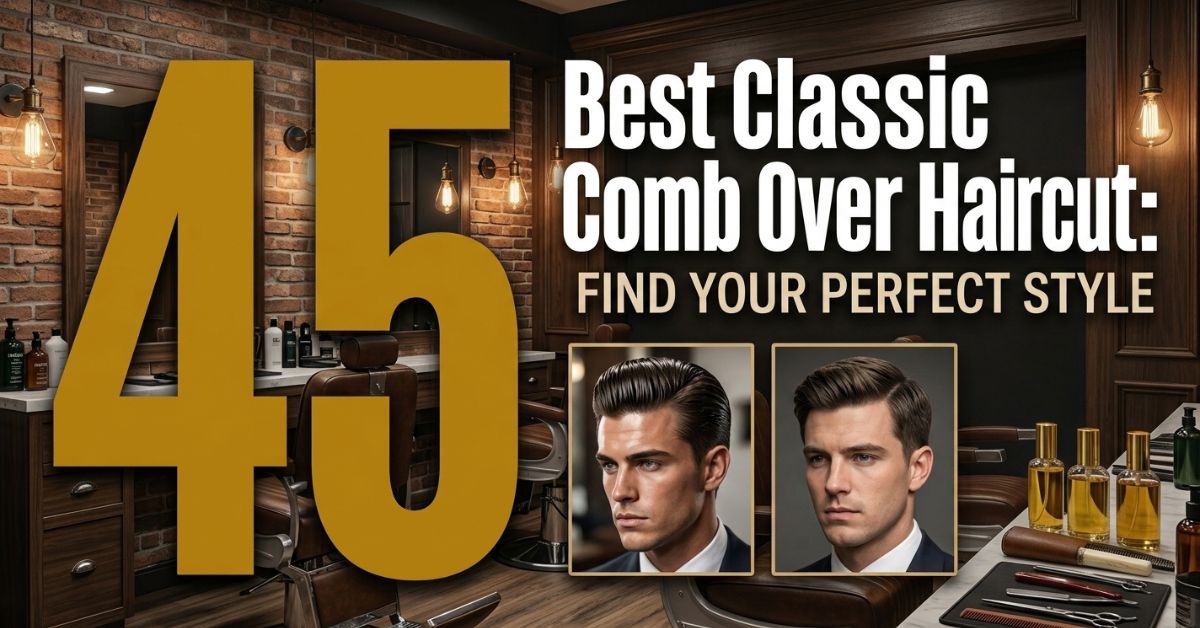
The comb over is one of the few men’s haircuts that has survived every trend cycle without losing its edge. It works in a boardroom, on a wedding day, and on a casual weekend out, because it simply adapts to whatever length, texture, or fade you pair it with.
If you’re trying to figure out which version suits you, this guide breaks down 45 classic comb over styles, how to match one to your face shape and hair type, and the exact products a barber would recommend to keep it looking sharp all day.
What Are the Best Classic Comb Over Haircut Styles?
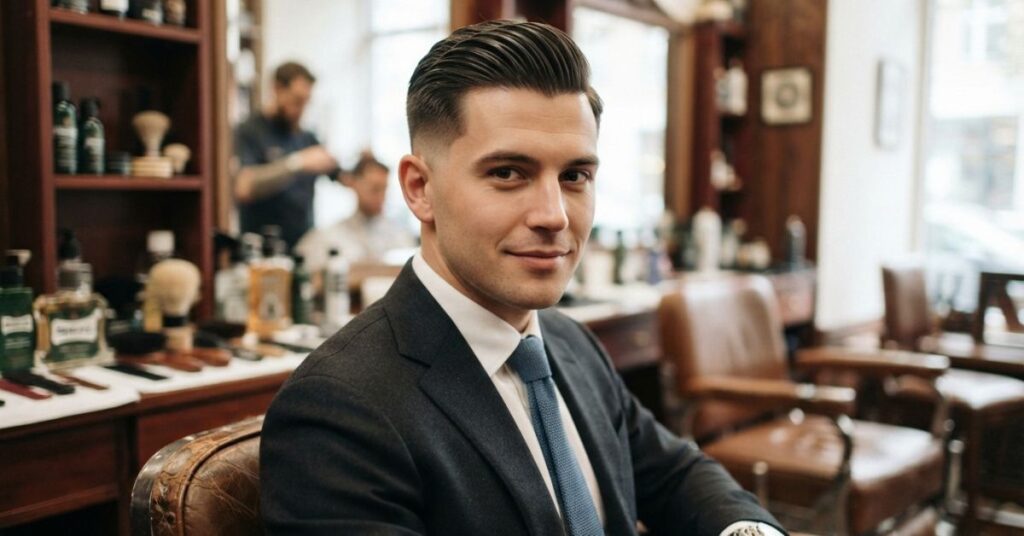
Below are 45 proven comb over variations, ranging from timeless and low maintenance to bold and modern.
1. Classic Comb Over

The original comb over uses a defined side part with hair swept smoothly across the top. It’s neat, professional, and works with almost any face shape.
2. Slick Classic Comb Over

This version relies on a strong pomade for a glossy, polished finish. It’s a go to for formal events and business settings.
3. Textured Classic Comb Over

Instead of a flat finish, the top is styled with a matte product to create movement and dimension, giving the cut a more casual feel.
Read More : 30 Best Surfer Haircut Styles for Men (2026)
4. Modern Comb Over

A shorter, tighter taper on the sides paired with a slightly longer top gives this style a fresher, contemporary edge over the traditional look.
5. Natural Comb Over

Minimal product and a soft part make this style look effortless, letting the hair fall the way it naturally grows.
6. Vintage Comb Over
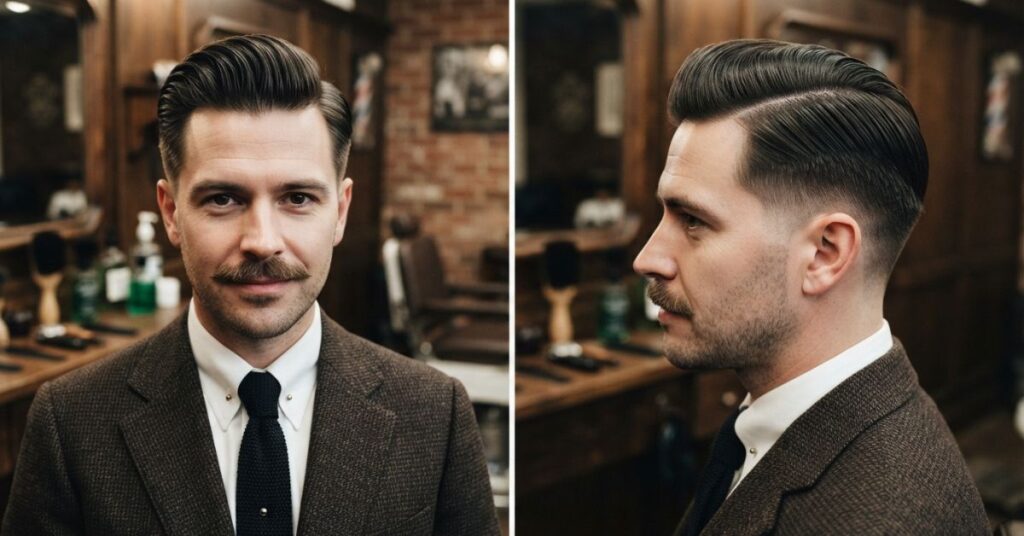
Inspired by 1920s and 1950s barbershop style, this cut features short sides and a high shine finish for a retro gentleman’s look.
7. Ivy League Comb Over

A preppy variation with slightly longer hair on top and a clean side part, popular in academic and corporate circles.
8. Deep Side Part Comb Over
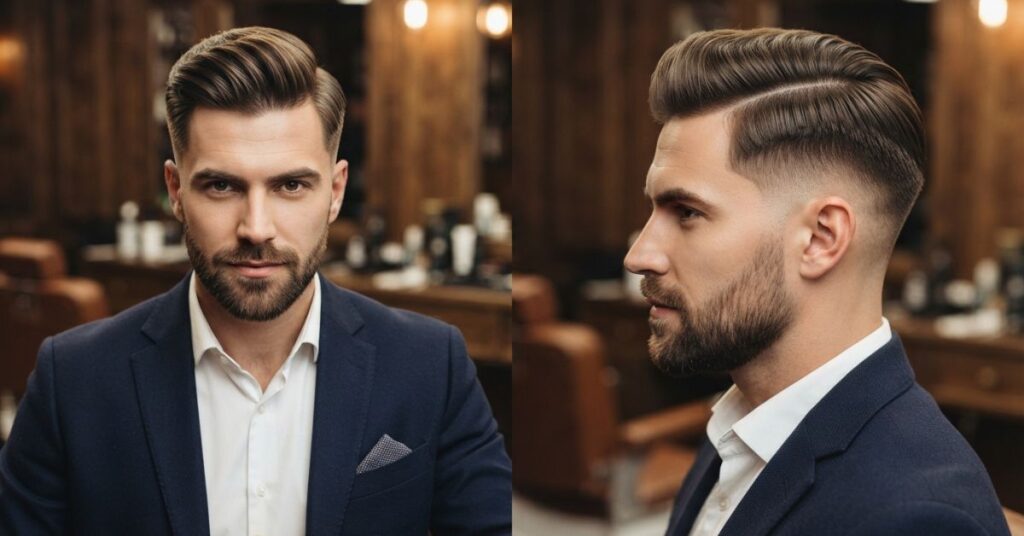
The part line sits lower near the temple, creating a sharper contrast and a more dramatic sweep across the head.
9. Short Classic Comb Over

Kept close to the scalp on top and sides, this low maintenance option suits men who prefer quick morning styling.
10. Medium Length Comb Over

With more length on top than the short version, this style offers flexibility to switch between slicked and textured looks.
11. Long Hair Comb Over

This bold take needs several inches of length on top and works best with wavy or straight hair for a dramatic sweep.
12. Classic Comb Over with Low Fade

A subtle fade that starts just above the ear keeps the sides tidy without drawing too much attention away from the top.
13. Classic Comb Over with Mid Fade

The fade begins around temple height, offering a balanced contrast between the shaved sides and the styled top.
14. Classic Comb Over with High Fade

A sharper, more dramatic fade that starts higher on the head, giving the comb over a bold, modern silhouette.
15. Classic Comb Over with Skin Fade

Also called a bald fade, this version tapers all the way down to bare skin for maximum contrast against the longer top.
16. Classic Comb Over with Taper Fade

A gradual taper fade blends the sides smoothly into the top without harsh lines, ideal for professional settings.
17. Classic Comb Over with Drop Fade
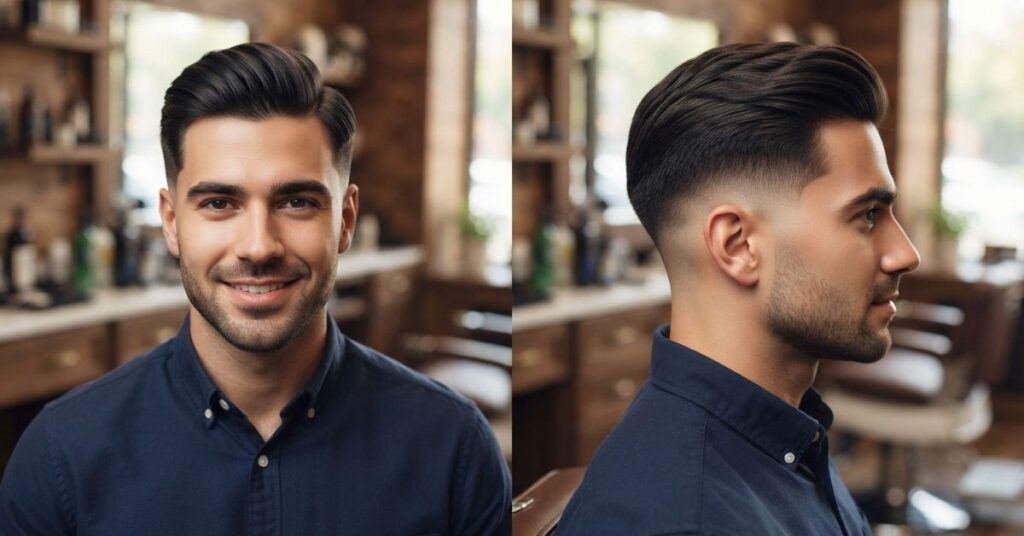
The fade curves downward behind the ear, adding a stylish, rounded shape that pairs well with textured tops.
18. Classic Comb Over with Burst Fade

This fade circles around the ear rather than running straight back, creating a unique, eye catching detail.
19. Classic Comb Over Undercut
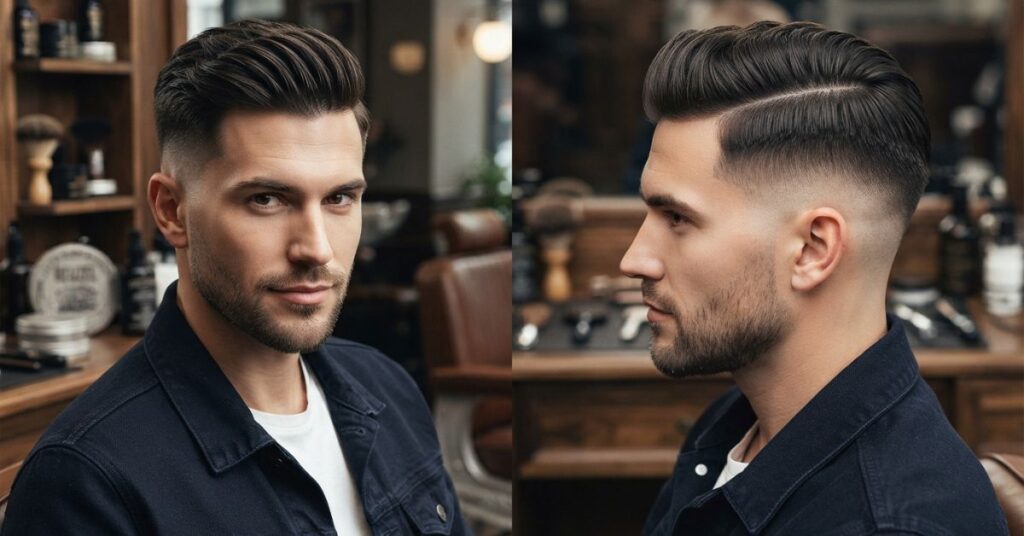
Sides and back are cut very short or shaved, creating a strong contrast with the longer, combed top section.
20. Disconnected Comb Over

The top and sides are cut with no blend at all, producing a sharp, edgy break between lengths.
21. Hard Part Comb Over
A razor shaved line replaces the natural part, giving the style a crisp, defined edge that lasts through the day.
22. Comb Over with Design
Barbers add a shaved line, pattern, or geometric shape into the fade for a more personalized, statement look.
23. Side Sweep Comb Over
Hair is combed diagonally across the forehead rather than straight back, softening the overall silhouette.
24. Rolling Comb Over
The top hair rolls slightly upward before sweeping over, adding volume and a wave like texture.
25. Comb Over Pompadour
Height is added at the front before the hair sweeps back and to the side, combining two classic styles into one.
26. Comb Over Quiff
A shorter, messier front section is pushed up and back, giving a more relaxed and youthful spin on the comb over.
27. Comb Over Mohawk
Sides are shaved close while the center strip is left longer and swept to one side for a punk inspired look.
28. Comb Over Mullet
Short on the sides and top, longer at the back, this retro hybrid has made a strong comeback in recent years.
29. High and Tight Comb Over
Very short sides paired with a slightly longer top create a clean, military inspired silhouette.
30. Spiky Comb Over
The top is styled with texturizing paste and slightly lifted before being swept to the side for added edge.
31. Brushed Up Comb Over
Hair is brushed upward at the roots before sweeping across, adding height and fullness to fine hair.
Read More : 25 Low Fade Haircuts For Men In 2026
32. Classic Comb Over for Straight Hair
Straight strands hold a sleek, defined part naturally, making this one of the easiest textures to style.
33. Classic Comb Over for Wavy Hair
Wavy hair adds natural texture and movement, so a lighter product works better than heavy pomade.
34. Classic Comb Over for Curly Hair
Curls need extra length on top and a strong hold cream to keep the comb over shape from loosening.
35. Classic Comb Over for Thick Hair
Thick hair holds volume well but may need thinning shears so the top doesn’t look too bulky.
36. Classic Comb Over for Fine or Thin Hair
A shorter length and a light volumizing product prevent fine hair from looking flat or limp.
37. Classic Comb Over for Round Face
Added height on top and a higher fade help elongate a round face shape.
38. Classic Comb Over for Square Face
A softer, rounded fringe balances strong jawlines without adding extra width.
39. Classic Comb Over for Oblong Face
Keeping the top shorter and avoiding excess height prevents the face from looking longer.
40. Classic Comb Over for Receding Hairline
A shorter length on top and a textured fringe help disguise thinning at the temples.
41. Classic Comb Over for Older Men
A low maintenance, moderate length version keeps the style age appropriate and easy to manage daily.
42. Classic Comb Over for Balding Men
Keeping sides very short and the top cropped close reduces the contrast between thinning and full areas.
43. Classic Comb Over with Beard
Pairing a full or medium beard with a comb over adds structure and balances the face shape.
44. Classic Comb Over with Stubble
Light stubble gives a rugged, low effort finish that complements a slicked or textured comb over.
45. Asian Comb Over
Naturally straight, dense hair suits a softer side part with a textured, slightly messy finish on top.
How Do You Choose the Right Classic Comb Over?
Picking the right variation comes down to two things: your face shape and your natural hair type.
By Face Shape
- Round face: Choose styles with height on top, like the comb over quiff or pompadour, to add length.
- Square face: Go for a soft side sweep to balance strong angles.
- Oval face: Almost any comb over works, since this is considered the most versatile face shape.
- Oblong face: Keep the top shorter and avoid extra height to prevent the face from appearing stretched.
- Diamond face: A textured comb over with a mid fade softens sharp cheekbones.
By Hair Type
- Straight hair: Holds a sleek part easily with light product.
- Wavy hair: Adds natural texture, best styled with a lightweight cream.
- Curly hair: Needs more length on top and a strong hold cream or gel.
- Thick hair: May need regular thinning to avoid bulk.
- Fine hair: Benefits from volumizing spray and a shorter overall length.
What Products Does a Classic Comb Over Need?
The right product depends on the finish you want, but most barbers recommend keeping a few essentials on hand.
- Pomade: Best for a slick, high shine, formal look. Water based pomade is easier to wash out than oil based.
- Matte clay or paste: Ideal for a textured, natural finish with a strong hold and no shine.
- Sea salt spray: Adds texture and grip before styling, especially useful for wavy or fine hair.
- Wide tooth comb: Helps create a clean part without pulling or damaging strands.
- Blow dryer with a round brush: Adds volume and helps set the part before applying product.
- Light hold gel: Works well for everyday, low maintenance versions of the comb over.
Applying product to damp hair, then combing it into place before it fully dries, tends to give the longest lasting hold.
Read More : Fade Haircuts for Men: Every Type Explained
FAQ
What is a classic comb over haircut?
It’s a style where hair is parted on one side and combed smoothly across the top, usually paired with shorter sides.
Is a classic comb over outdated?
No, it remains one of the most requested men’s cuts because it adapts easily to modern fades, textures, and lengths.
What is the difference between a classic comb over and a modern comb over?
The classic version uses a flatter, more polished finish, while the modern comb over often includes a tighter fade and more texture on top.
Can a classic comb over work on curly hair?
Yes, as long as the top is left long enough and styled with a strong hold cream to control the curl pattern.
What is the best classic comb over for older men?
A moderate length, low maintenance version with a subtle fade tends to look the most age appropriate.
How long does hair need to be for a classic comb over?
At least two to three inches on top is usually enough to comb and sweep the hair into place.
Whichever version you choose, the comb over remains one of the most reliable men’s haircuts because it can be dressed up, dressed down, and adjusted for nearly any face shape or hair type. Bring a photo of the style you like best to your next barber visit and ask them to tailor the length and fade to your features.

Evan Blake is a hair style writer and contributor at Faxhion Styles. He focuses on researching haircuts, styling ideas, hair trends, and practical grooming topics. His goal is to present clear, useful, and reader friendly information that helps audiences explore different styles and make informed choices for their individual hair needs.