
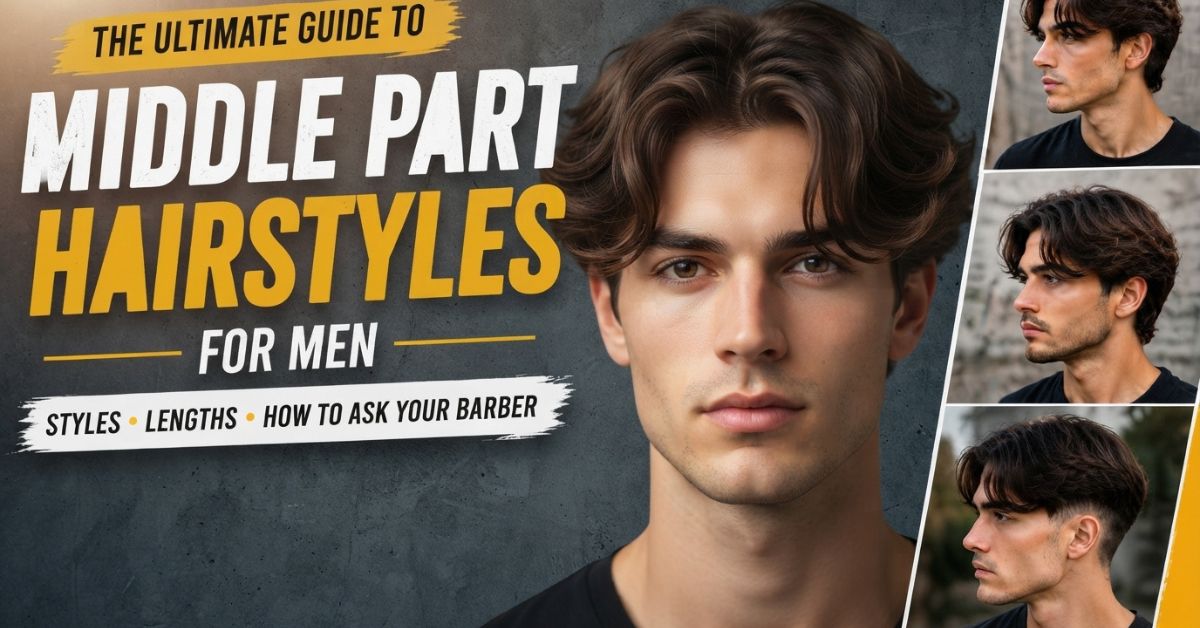
Middle part hairstyles for men have moved far beyond the slicked-back 90s curtain look. In 2026, this haircut spans everything from short textured crops to shoulder-length curls, and it works on nearly every hair type when it is cut and styled correctly. Whether you want a low-maintenance office-ready cut or a bold statement style, there is a version of the middle part built for you.
This guide breaks down 18 of the best middle part hairstyles by length, explains which face shapes and hair types suit each one, and answers the questions most men actually ask before booking a barber appointment.
What Are the Best Middle Part Hairstyles for Men?
The best middle part hairstyles depend on three things: how much length you have on top, your natural hair texture, and how much contrast you want between the top and sides. Below, the styles are grouped by length so you can jump straight to the section that fits your current hair and skip the options that will not work for you yet.
SHORT STYLES (4-5 Inches on Top)
Short middle part styles are the easiest to grow into and the quickest to maintain. They suit men who are new to the middle part or who want a cleaner, more corporate-friendly version of the trend.
Short Curtain Bangs
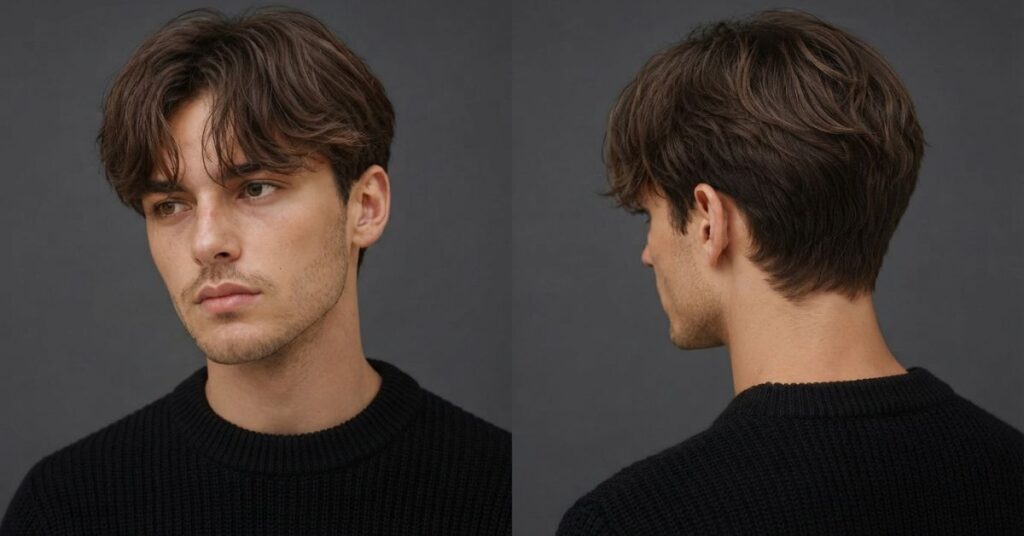
Short curtain bangs keep the fringe just long enough to sweep to either side of the forehead, usually landing above the brow. The sides stay short and natural, often with a light scissor trim rather than a hard fade. This version is the most versatile entry point into middle part hairstyles because it requires minimal daily styling, just a comb-through and a touch of light cream once the hair is dry.
Middle Part Fade

The middle part fade pairs a short, centre-parted top with a tapered or skin fade on the sides. This is one of the most requested middle part haircuts for men who want sharp contrast and a barbershop-fresh look that lasts between visits. It works especially well for men with thick or coarse hair, since the fade removes bulk while the top keeps enough length to hold a defined part.
Blunt Cut Middle Part
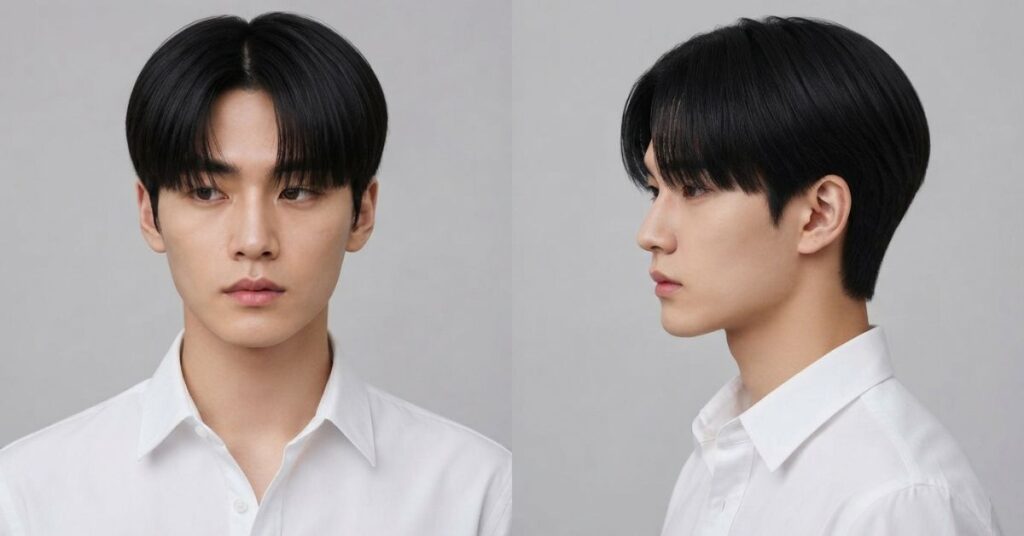
A blunt cut middle part uses a straight, unlayered fringe line for a graphic, editorial look. Instead of soft, wispy pieces, the ends are cut in a clean horizontal line across the forehead. This style photographs well and suits straight, healthy hair, but it needs regular trims every three to four weeks to keep the blunt edge from growing out unevenly.
E-Boy Middle Part

The e-boy middle part is a shaggier, internet-influenced take on the classic curtain, usually paired with slightly longer length, tousled texture, and a piece-y fringe that sits close to the eyes. Layers are cut throughout instead of one solid line, giving movement even without heat styling. It is popular with younger men who want a relaxed, undone finish rather than a polished barbershop look.
MEDIUM STYLES (5-7 Inches on Top)
Medium length is where the middle part really starts to show off texture and movement. This range gives you enough hair to shape without the upkeep of longer cuts.
Classic Curtains
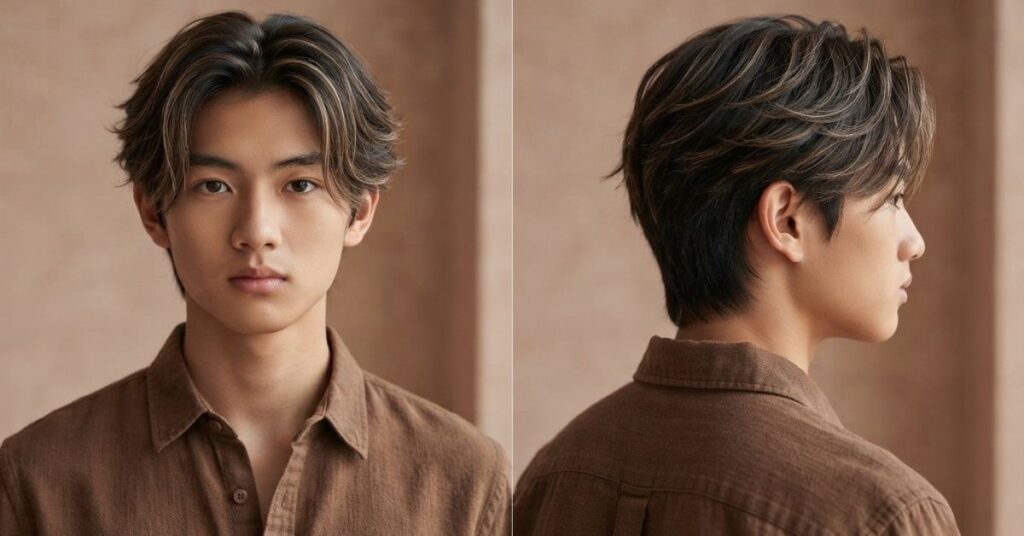
Classic curtains are the original middle part silhouette, two even sections of hair falling from a centre part and framing each side of the face. This cut has been in and out of style since the 1990s and remains the reference point every barber uses when discussing middle part haircuts. It suits oval and round face shapes particularly well because the framing effect narrows the appearance of the face.
Textured Middle Part

A textured middle part relies on point cutting and texturising shears to break up the ends and add visible separation. Rather than falling in one smooth sheet, the hair sits in soft, defined pieces. This works best on wavy or naturally textured hair, since straight, fine hair often needs a texturising spray to fake the same effect.
Korean Middle Part
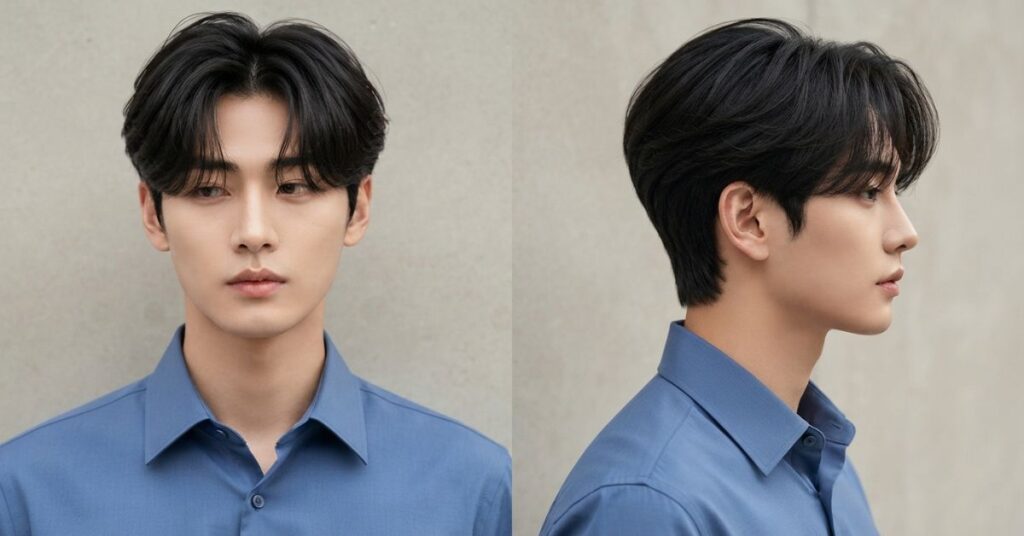
The Korean middle part, sometimes called the two block cut, combines a soft, rounded fringe with heavily tapered or undercut sides. It became globally popular through K-pop and Korean drama styling and typically uses a light styling wax for a soft, matte finish rather than shine. It suits straight to slightly wavy hair and flatters oval, heart, and diamond face shapes.
Middle Part with Taper
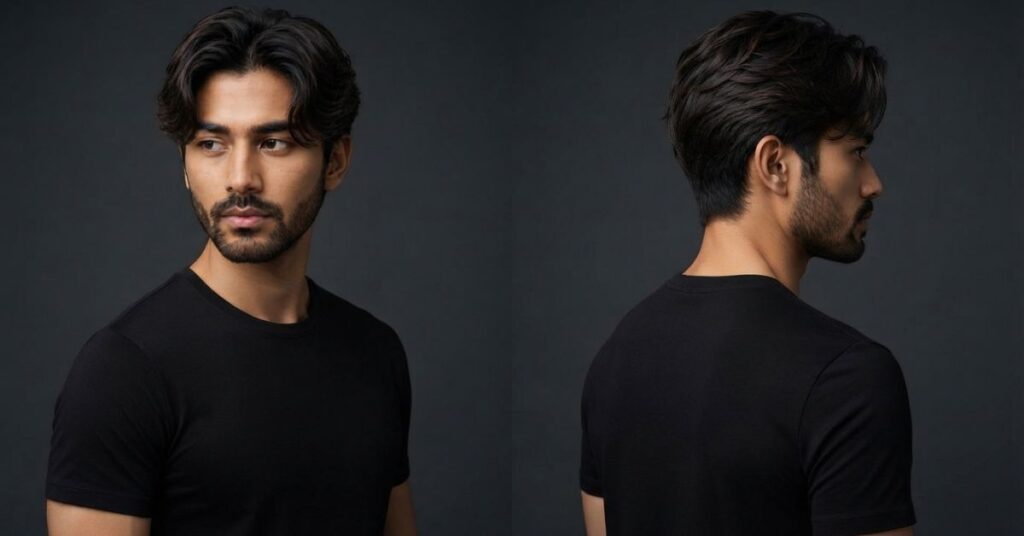
This style keeps the sides tapered rather than fully faded, creating a softer transition between the short sides and the longer top. It reads as more mature and professional than a skin fade, making it a strong choice for workplaces with conservative dress codes while still giving you the modern middle part silhouette on top.
Messy Curtains

Messy curtains take the classic curtain shape and deliberately disrupt it with sea salt spray, finger styling, and minimal comb work. The goal is a lived-in, just-got-out-of-bed look that still has intentional shape underneath. It is one of the lowest-effort medium length styles once you learn the finger-drying technique.
Middle Part Undercut

The middle part undercut pairs a long, flowing top with a disconnected undercut underneath, usually shaved to a number one or two guard with no blending into the top. The lack of a gradual fade is the point: the contrast between the buzzed sides and the long curtain fringe is meant to look deliberate and sharp.
Two Block Middle Part
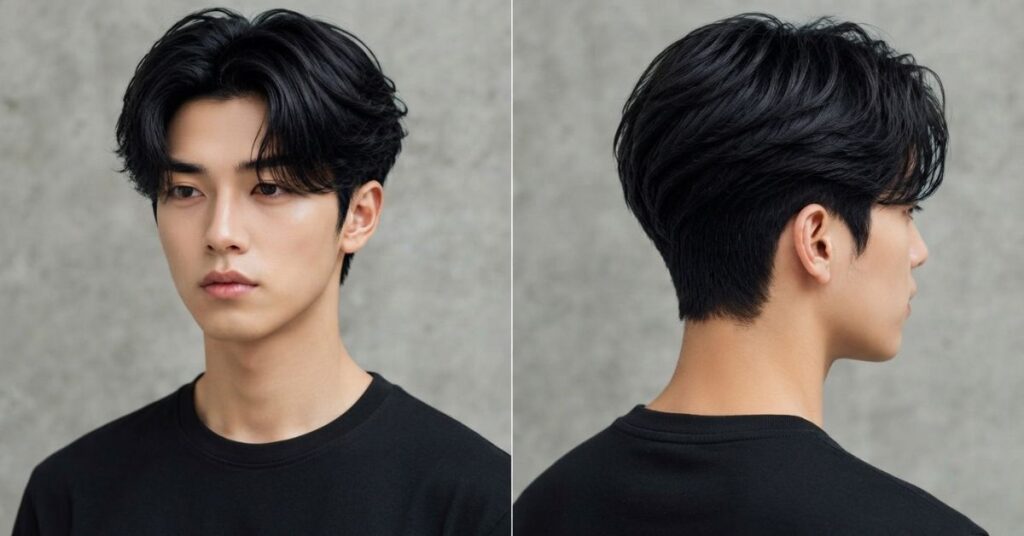
Two block cuts originated in Korean barbering and keep the sides and back tightly cropped while leaving noticeably more length on top, parted down the middle. The name refers to the two visible length “blocks” on the head. It suits thick, straight hair and gives a rounder, fuller silhouette on top compared to a standard taper.
Read More : 32 Best Burst Fade Haircuts For Men
LONG STYLES (7+ Inches on Top)
Long middle part styles need patience to grow out and more daily maintenance, but they offer the most dramatic framing and movement of any length category.
Middle Part Flow Curtains

Flow curtains extend the classic curtain shape past the jawline, letting the hair fall with more visible weight and movement. Layers are usually kept minimal to preserve length and encourage the hair to fall naturally into place rather than flipping outward. This length works best on hair with at least a slight natural wave, since dead-straight hair can look flat without it.
Curly Middle Part

A curly middle part lets natural curls fall freely on either side of a centre part instead of forcing them into a symmetrical shape. Curl definition products and diffusing rather than straight blow-drying are essential here, since curls shrink significantly when they dry and the part needs to be set while hair is damp.
Middle Part Perm
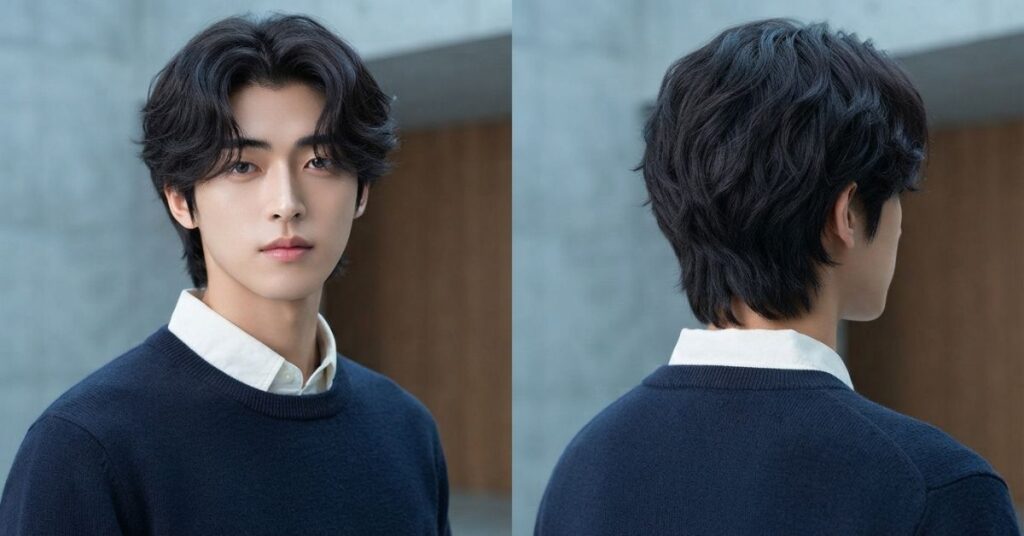
For men without natural texture, a middle part perm adds wave or curl through a chemical process, giving the hair the volume and movement that long, straight hair often lacks. Perms need specific aftercare, including sulfate-free shampoo and reduced washing frequency, to keep the curl pattern intact for as long as possible.
SPECIALTY STYLES
These cuts borrow from other trending men’s hairstyles and combine them with a centre part for a more distinctive finish.
Wolf Cut Middle Part
The wolf cut blends heavy shag-style layering with a middle part, creating a choppy, voluminous shape that sits between short and long. It works particularly well on medium to thick hair and gives noticeably more texture at the crown than a standard shag.
Slick Back Middle Part
This version combines a fade on the sides with a wet, slicked-back finish on top instead of a soft, natural fall. Pomade or a strong-hold gel is used to create shine and hold, making it a polished option for formal occasions or a sharper everyday look.
Middle Part Braids
Middle part braids section the hair from a centre parting into two or more braids, a practical option for very long hair or for men wanting a protective style. This works across most hair textures, though the braiding technique differs for curly versus straight hair.
Middle Part Mullet
The middle part mullet pairs short, side-parted-looking length at the front with a longer back section, all divided by a centre part on top. It is one of the more maximalist entries on this list and suits men who already have a mullet grown in and want to update the front styling.
Which Middle Part Suits Your Face Shape?

Face shape has a real effect on how flattering a middle part looks, since the centre parting draws the eye straight down the middle of the face.
- Oval faces can wear almost any middle part style, from short curtains to a long flow, because the proportions are already balanced.
- Round faces benefit from added length and height, since a middle part with volume at the crown and length past the jaw helps elongate the face.
- Square faces look best with a longer, softer middle part, since extra length and gentle layering soften strong jaw and cheekbone angles.
- Heart-shaped faces suit a middle part with volume near the jawline, which helps balance a wider forehead against a narrower chin.
- Diamond faces work well with flowing curtain styles, since the framing effect softens prominent cheekbones.
- Long or oblong faces generally do better with more width on the sides and less added height on top, so the centre part does not stretch the face further.
Which Hair Type Works Best with a Middle Part?
Middle part hairstyles adapt to most hair types, but the styling approach changes significantly depending on texture.
- Straight hair gives the cleanest, sharpest centre line and suits blunt cuts, slick back styles, and classic curtains.
- Wavy hair adds natural movement without much effort, making it ideal for textured middle parts and messy curtains.
- Curly hair should lean into curl-specific cuts rather than fighting the texture, since forcing curls into a rigid symmetrical shape usually looks unnatural.
- Thick hair handles longer lengths and heavier styles like the two block cut well, since there is enough density to hold shape.
- Fine hair generally looks better shorter, since length without density can appear flat and separate unevenly at the part.
Read More :Fade Haircuts for Men: Every Type Explained
How Do You Maintain a Middle Part?
Keeping a middle part looking sharp comes down to a consistent, simple routine rather than heavy daily styling.
- Wash with a sulfate-free shampoo two to three times a week to avoid stripping natural oils that help the part hold its shape.
- Part the hair while it is still damp using a fine-tooth comb, drawing a straight line from the centre of the forehead back to the crown.
- Blow-dry with a round brush or your fingers, directing the hair down and slightly outward from the part rather than straight back.
- Apply a lightweight styling cream, clay, or sea salt spray depending on whether you want a natural, matte, or textured finish.
- Book a trim every four to six weeks for short and medium styles, and every six to eight weeks for longer lengths, to keep the shape from growing out unevenly.
- Train a stubborn part by combing it in the same direction daily for two to four weeks, especially if your hair naturally falls to one side.
FAQ
Does a middle part work for receding hairlines?
It can, but a receding hairline at the temples often becomes more visible with a middle part. A slightly off-centre part or added fringe length usually camouflages it better than a dead-centre split.
How long does it take to train hair for a middle part?
Most men need two to four weeks of consistent combing and drying in the new direction before the hair naturally falls into the part without much effort.
Can you get a middle part with a cowlick?
Yes, though a strong cowlick may require a slightly off-centre part or extra product to lay flat. A barber can also cut around the cowlick to reduce its resistance.
Does a middle part make your face look wider?
Not typically. A middle part usually draws the eye vertically down the centre of the face, which tends to create a slimming or elongating effect rather than a widening one.
What happens if you get a middle part with the wrong face shape?
It will not look wrong, but it may emphasise a feature you would rather downplay, such as a wide forehead or strong jawline, depending on the specific shape.
Should you get a middle part if your hair parts naturally to one side?
Yes, but expect a short training period. Natural side parts can be retrained with damp combing and consistent drying, though very strong growth patterns may need a barber’s help.
Final Thoughts
Middle part hairstyles for men remain one of the most adaptable haircut categories available right now, covering everything from a five-minute short curtain to a fully permed long flow. The key to getting it right is matching the length and texture of the cut to your actual hair type and face shape rather than copying a reference photo exactly. Bring two or three of these styles to your next barber appointment, be honest about how much daily styling time you actually want to spend, and you will walk out with a middle part that suits you rather than fights your hair.

Evan Blake is a hair style writer and contributor at Faxhion Styles. He focuses on researching haircuts, styling ideas, hair trends, and practical grooming topics. His goal is to present clear, useful, and reader friendly information that helps audiences explore different styles and make informed choices for their individual hair needs.