

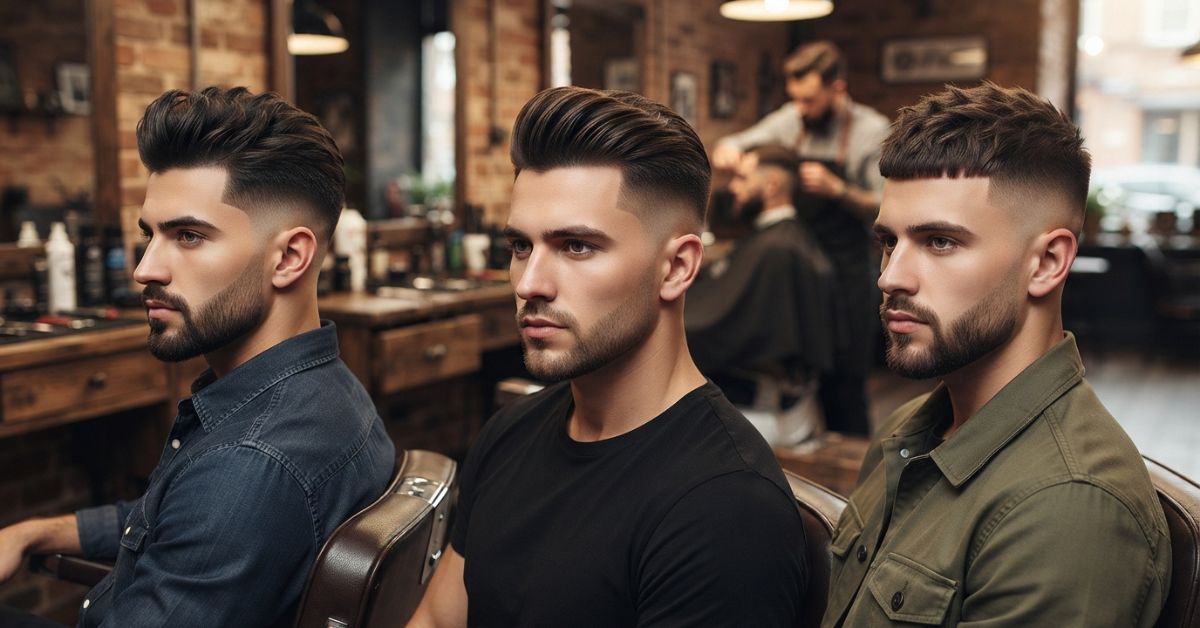
Quick answer: The only real difference between a low, mid, and high fade is where the fade starts. A low fade starts just above the ear. A mid fade starts at temple level. A high fade starts above the temples. The higher it starts, the more skin shows, the bolder the contrast, and the more often you need a trim.
Most men walk into a barbershop and say “fade.” That one word leaves out the most important detail: the height.
Height changes how the cut sits on your face, how long it lasts, and where you can wear it. This guide breaks down low fade vs mid fade vs high fade in plain language. You will also learn which one fits your face shape, hair type, and schedule, plus exactly what to say in the chair.
Low Fade vs Mid Fade vs High Fade: Side-by-Side Comparison
| Low Fade | Mid Fade | High Fade | |
|---|---|---|---|
| Where it starts | Just above the ear | Temple level | Above the temples |
| Contrast | Subtle | Moderate | Bold |
| Skin visible | Minimal | Moderate | Maximum |
| Best face shapes | All, especially oblong | All | Oval, round, square |
| Fine or thin hair | Any variation works | Taper finish only | Shadow fade only |
| Upkeep | Every 3 to 4 weeks | Every 2 to 3 weeks | Every 1 to 2 weeks |
| Best setting | Office, formal | Most settings | Creative, athletic, bold |
| Grow-out | Cleanest | Moderate | Loses shape fastest |
What Is the Key Difference Between Low, Mid, and High Fade?
Everything comes down to one decision: the starting point of the fade line. That is the spot where the sides begin to blend from longer hair into shorter hair.
- Low fade: The blend sits close to the ear and neckline. Most of the side hair stays, so the cut looks soft and grows out gracefully.
- Mid fade: The blend starts around the temple. You get more skin and clearer contrast between the top and sides.
- High fade: The blend starts above the temples. The sides are mostly skin, so the hair on top becomes the main feature.
A fade has three separate parts, and mixing them up causes most bad haircuts:
- Height: low, mid, or high.
- Closeness: how short the base gets (bare skin, stubble, or a #1 guard).
- Shape: a straight line all around, a drop fade, or a burst fade.
Keep these three apart and you will explain any fade clearly.
Read More : 35 Best Korean Hairstyles for Men In 2026
Low Fade vs Mid Fade: What Is the Difference?
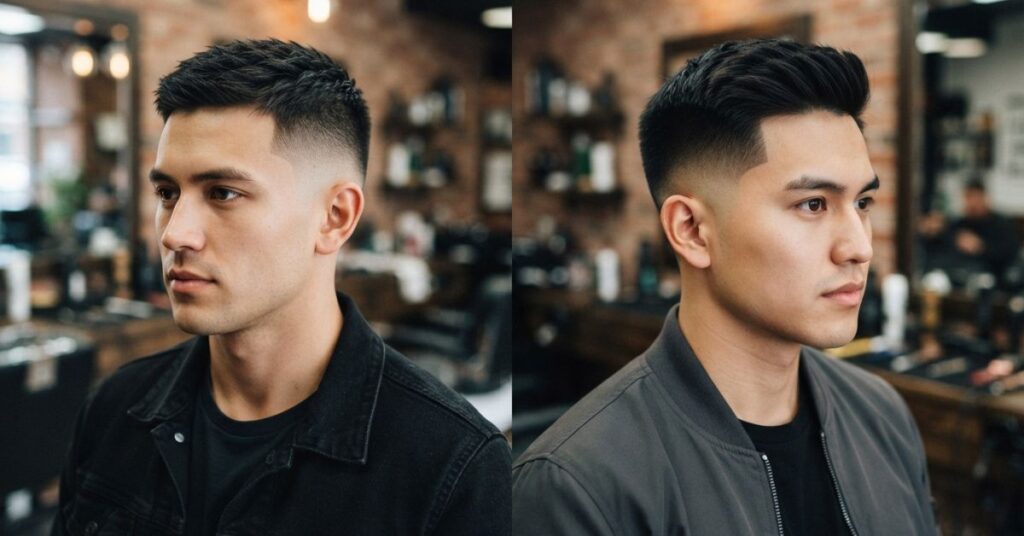
The gap between them is small on paper, but it looks big in the mirror. A low fade sits just above the ear. A mid fade sits at the temple, so more of the sides disappear.
Choose a low fade if you:
- Have an oblong or long face
- Work in a formal or conservative office
- Want a cut that still looks tidy after four weeks
Choose a mid fade if you:
- Want modern contrast without going bold
- Like a balanced, all-purpose look
- Are unsure which height to pick
Barbers often call the mid fade the safe starting point. It adapts to more face shapes, hair types, and dress codes than the other two. If you are trying fades for the first time, start here.
Low Fade vs High Fade: What Is the Difference?
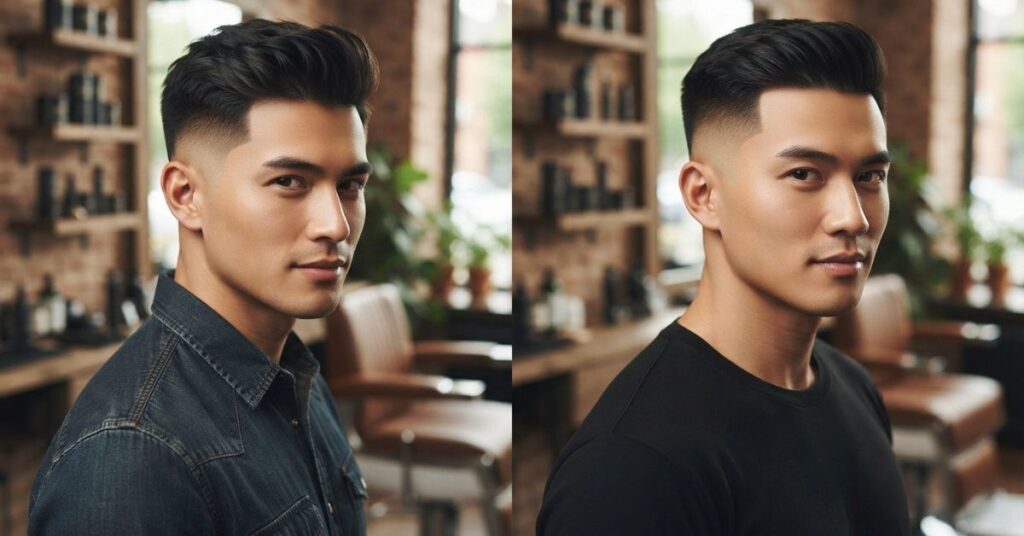
These two sit at opposite ends of the scale.
The low fade is restraint. The sides stay clean, most of the hair remains, and the grow-out is gentle. The high fade is commitment. Everything above the temples goes tight, and each week of growth shows.
Low fade fits:
- Long and oblong faces
- Conservative workplaces
- Men who want low upkeep
High fade fits:
- Round and square faces, since the height adds visual length
- Creative and athletic settings
- Men who can visit the barber every one to two weeks
If you cannot commit to frequent trims, a high fade will frustrate you. Go lower.
High Fade vs Mid Fade: What Is the Difference?
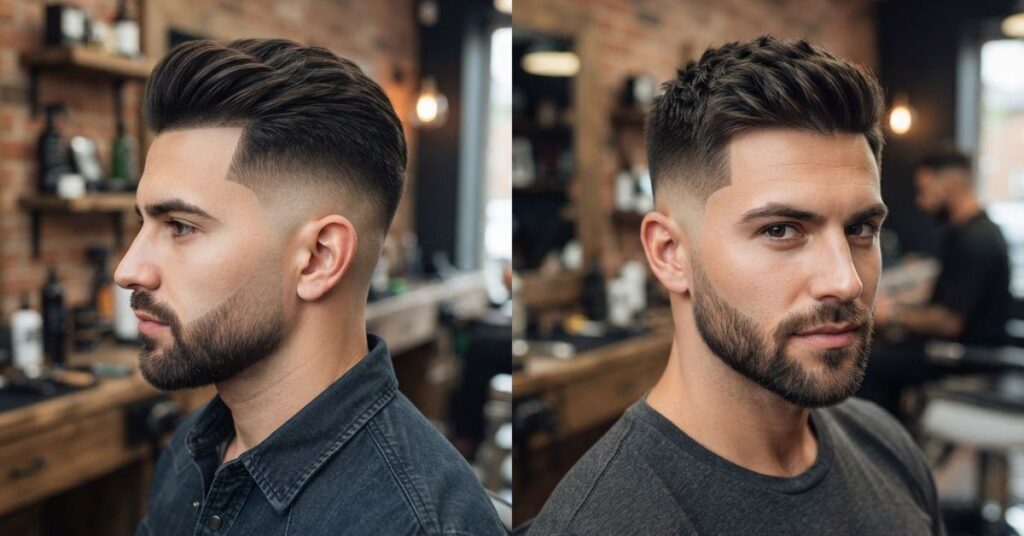
The mid fade is the more practical cut. It gives you sharp modern contrast without the upkeep that comes with going higher.
A high fade is sharper and less forgiving. One week of growth on a high fade looks neglected. The same growth on a mid fade just looks like it is due for a trim.
- Mid fade: Sharp enough to look intentional, forgiving enough to last two to three weeks.
- High fade: Maximum contrast. Thick hair carries it best because the density on top balances the bare sides.
Skin Fade vs High Fade: What Is the Difference?
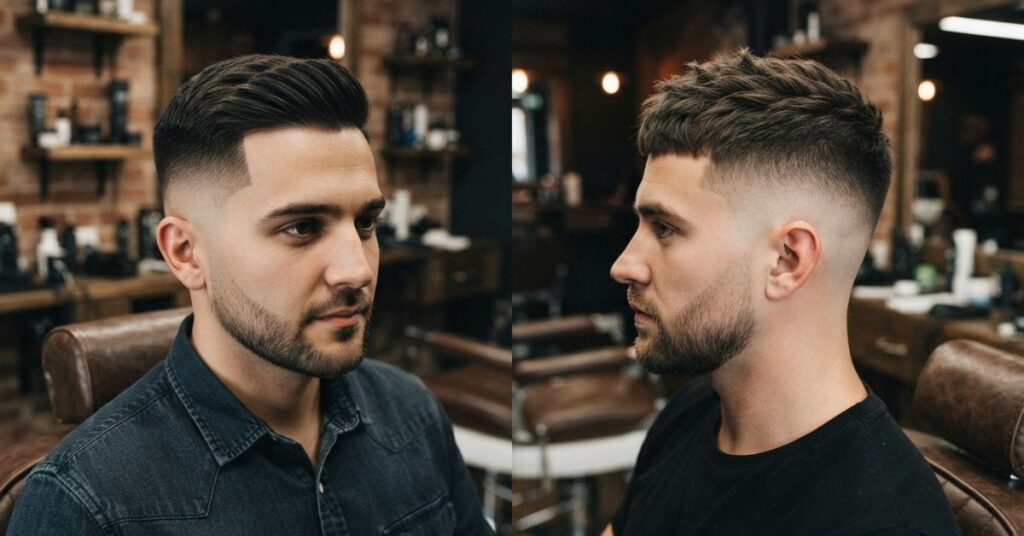
People mix these up all the time because they measure different things.
- Skin fade describes closeness. The base is cut down to bare skin, usually with a foil shaver or straight razor. It can be low, mid, or high.
- High fade describes height. The fade starts above the temples. The base could be skin, stubble, or a short guard.
A high skin fade combines both. It has a high starting point and bare skin at the base. It is the sharpest finish available and also the most demanding. Plan on a trim every one to two weeks.
A quick note on tapers: A taper is a gentler cousin of the fade. It shortens the hair gradually but keeps some length at the neckline and never reaches bare skin. Many barbers say “taper fade” for that softer look. If you want subtle, ask for a taper. If you want a bald finish at the base, ask for a skin fade.
Which Fade Suits Your Face Shape?
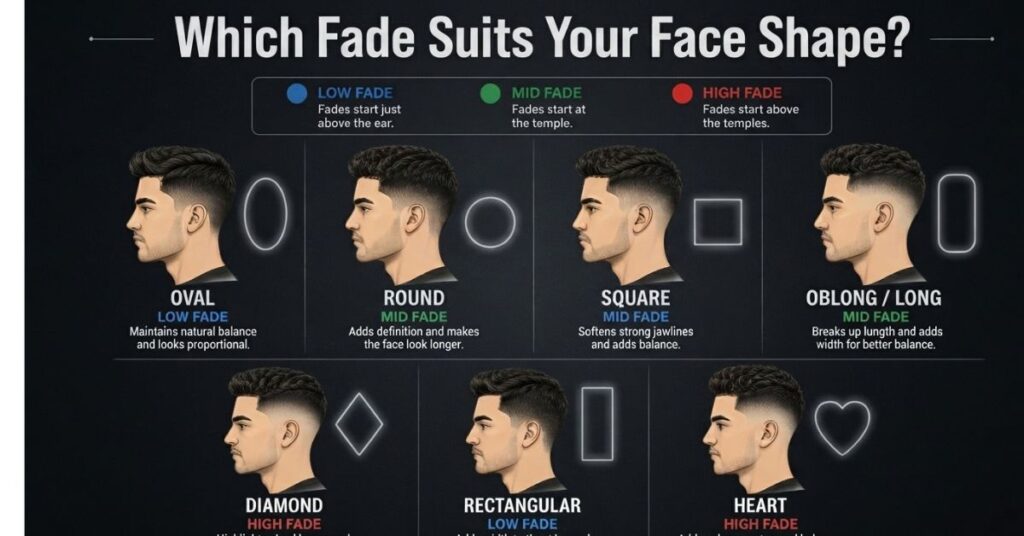
Here is the logic that clears up the confusion. Height on the sides visually adds length to the face. So round and square faces benefit from a mid or high fade. Long and oblong faces do better with a low fade, because it does not stretch the face any further.
| Face Shape | Best Fade | Why |
|---|---|---|
| Oval | Any | Balanced proportions suit all three |
| Round | Mid or high | Adds visual length |
| Square | Mid or high | Highlights the jawline and adds structure |
| Oblong or long | Low | Avoids adding more height |
| Diamond | Mid | Keeps width at the sides |
| Rectangular | Low or mid | Avoids extra height |
| Heart | Low or mid | Avoids sharpening the temples |
Some guides recommend a low fade for round faces. The reasoning above is why most barbers lean the other way. That said, hairline, head shape, and the style on top also matter. Ask your barber to look at the full picture.
Which Fade Suits Your Hair Type?
Hair texture changes how a fade looks and how fast it fades from view. Thick hair holds high fades well. Fine or thin hair looks best with a low or mid taper finish, since a high, bare fade can expose thin spots on top.
Low Fade vs Mid Fade vs High Fade for Straight Hair
All three work on straight hair. The difference is how quickly the grow-out shows. Straight hair has no texture to hide new length, so the fade line becomes visible sooner.
- Low fade: Looks fresh for about four weeks.
- Mid fade: Holds for two to three weeks.
- High fade: Looks sharp for about a week, then softens fast.
Straight hair can also look flat on top. Ask your barber to point cut the top section. It adds movement and texture without adding length.
Low Fade vs Mid Fade vs High Fade for Curly Hair
Curly hair shrinks as it dries. A fade that sits at the temple when your hair is wet can look like a high fade once the curls spring back. This is the most common mistake with curly hair and fades.
The fix is simple: ask your barber to set the fade height based on how your hair looks dry.
- Low fade: The most forgiving. If it rises a little when dry, it still reads as low.
- Mid fade: Needs precision, because a wet mid fade can turn into a dry high fade.
- High fade: Already starts high, and shrinking curls push it higher. Scissor-over-comb work gives better control where curls meet the fade.
A drop fade or burst fade suits curly hair at any height. Both follow the natural growth pattern of the head instead of cutting against it. The same dry-hair rule helps with coily and 4C textures.
Which Fade Suits Your Lifestyle?
Your daily routine matters as much as your face shape.
- Office or formal: A low fade. A mid fade with a side part or comb over also stays professional. A high skin fade usually does not.
- Casual or creative: Any of the three. A high fade suits you if you want the haircut to stand out.
- Athletic: A mid or high fade. The short sides look clean between sessions and need no daily styling.
- Low maintenance: A low taper fade. It stays presentable longer than any other option here.
What to Tell Your Barber?
Saying “fade” alone tells the barber very little. Be specific on all three parts.
- Height: “Low fade, just above the ear,” “Mid fade, starting at the temple,” or “High fade, above the temples.”
- Closeness: “Skin at the base” or “keep some hair at the base.”
- Shape: “Straight line all the way around” or “drop it behind the ear.”
A full example: “Mid fade, starting at the temple, skin at the base, straight line all the way around.”
Two extra tips help. Bring a reference photo, since words can be read differently. And if you have curly hair, remind your barber to judge the height dry.
How Often Should You Get Each Fade?
Upkeep depends on both height and closeness. Skin fades need the most attention.
| Fade Level | Skin Fade | Classic Fade | Taper Finish |
|---|---|---|---|
| Low fade | Every 2 weeks | Every 3 weeks | Every 3 to 4 weeks |
| Mid fade | Every 1 to 2 weeks | Every 2 to 3 weeks | Every 3 weeks |
| High fade | Every 1 to 2 weeks | Every 2 weeks | Every 2 to 3 weeks |
When in doubt, go lower. A fresh low fade looks better than a grown-out high fade.
Quick Decision Guide
Answer these four questions to pick your fade.
- How often can you visit the barber?
- Every 1 to 2 weeks: high fade
- Every 2 to 3 weeks: mid fade
- Every 3 to 4 weeks: low fade
- What is your face shape?
- Long or oblong: low fade
- Round or square: mid or high fade
- Oval: any
- What is your environment?
- Formal office: low or mid fade
- Creative or casual: any
- Maximum contrast: high skin fade
- What is your hair density?
- Thick: any, including a high skin fade
- Fine or thin: low or mid taper fade
Read More : 28 Best High Fade Haircuts For Men in 2026
Conclusion
Low fade vs mid fade vs high fade is a question of height, and height decides contrast, upkeep, and how the cut suits your face. The low fade is calm and long lasting. The mid fade is the balanced, do-anything choice. The high fade is bold and needs frequent trims.
Match the height to your face shape, your hair texture, and how often you will realistically visit the barber. Then tell your barber the height, closeness, and shape. That small bit of clarity is what turns a decent haircut into the one you wanted.
FAQ
What is the difference between low, mid, and high fade?
The starting height. Low starts just above the ear, mid at the temple, and high above the temples. Higher means more skin, more contrast, and more upkeep.
Which fade lasts the longest?
The low fade. A low taper fade can look good for three to four weeks before needing a touch-up.
Which fade is best for a round face?
A mid or high fade, because both add visual length. Low fades suit oblong and long faces better.
Which fade is most versatile?
The mid fade. It works across the widest range of face shapes, hair types, and settings.
What is the difference between a low fade and a mid taper?
A low fade starts just above the ear and can go down to bare skin. A mid taper starts at the temple but always keeps some hair at the base.
What is the difference between a skin fade and a high fade?
A skin fade is about closeness, with bare skin at the base. A high fade is about height, starting above the temples. A high skin fade is both.
Can curly hair get any of the three fades?
Yes. Ask your barber to set the height on dry hair, since curls shrink and push the fade line higher.
Which fade is best for straight hair?
All three work. The low fade grows out the cleanest, while the high fade gives the sharpest lines but shows growth fastest.
Read More : 20 Best Hairstyles for Men with Large Foreheads (2026)

Evan Blake is a hair style writer and contributor at Faxhion Styles. He focuses on researching haircuts, styling ideas, hair trends, and practical grooming topics. His goal is to present clear, useful, and reader friendly information that helps audiences explore different styles and make informed choices for their individual hair needs.