


Quick answer: A shag is a layered cut with short pieces on top, longer lengths below, and ends cut to look feathered. It suits straight, wavy and curly hair at almost any length. Medium shags are the easiest place to start, and most need a trim every 6 to 8 weeks.
Shaggy haircuts for men have moved from rock stages to everyday barbershops. The reason is simple. The cut builds texture into the hair, so you spend less time fighting it each morning.
The look took off in the early 1970s. Stylist Paul McGregor is often credited with the version Jane Fonda wore in Klute. Today’s men’s shag is tidier and easier to wear to work. This guide covers 25 styles, the words to use in the chair, common mistakes and a care schedule.
Best Shaggy Haircuts for Men
Match the cut to your face and hair before you pick a name.
Quick face shape guide:
- Oval: Nearly every shag works.
- Round: Add height at the crown and keep the sides slim.
- Square: Choose softer layers and a wispy fringe.
- Heart: Pick a side-swept fringe with fuller layers near the jaw.
- Diamond: Try a textured fringe to widen the forehead line.
Quick hair type guide:
- Wavy: The easiest match.
- Curly: Cut it dry or close to dry.
- Straight: Needs sharp point cutting to show the layers.
- Fine: Keep layers long and soft.
- Thick: Remove weight from inside the cut.
1. Classic Shag
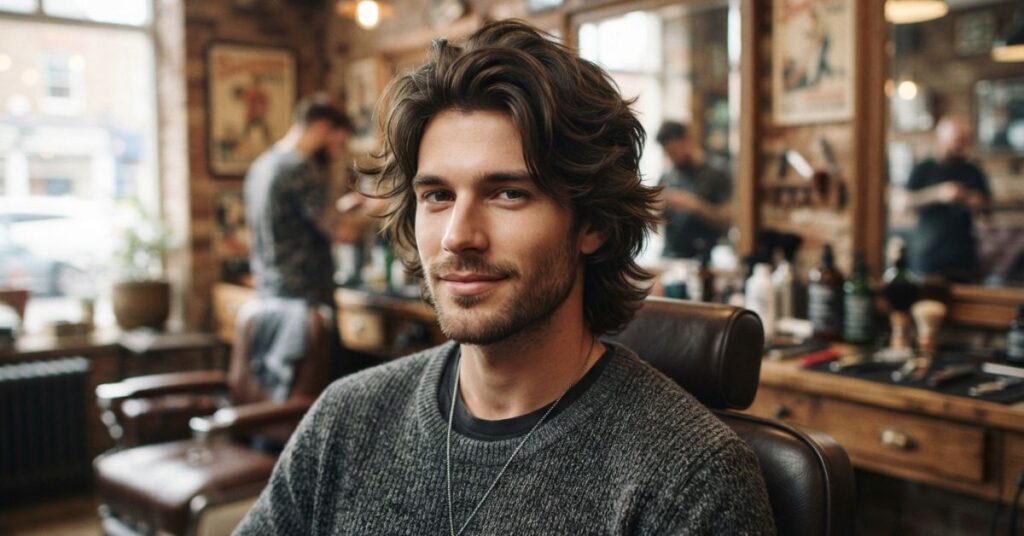
This is the 1970s original. Stacked layers sit on top, wispy ends reach the ears, and the length lands at the collar. A full fringe skims the brow. It flatters oval and oblong faces and works best on wavy or thick hair. Rough-dry with your fingers and add a little texture cream through the middle lengths.
2. Modern Shag
The modern version cleans up the ear line and softens the fringe. Length stays just above the collar, so it works at the office and on weekends. It suits oval, square and heart-shaped faces. Blow-dry loosely with your head tipped forward, then run matte paste through the ends.
3. Short Shag
Choppy layers are packed into a short length, usually two to three inches on top. The fringe is broken and short. This is a good first shag for men who fear long upkeep. It also suits teens. Scrunch in matte clay and push the pieces in slightly different directions.
4. Medium Shag
This is the most requested length for good reason. Hair covers the tops of the ears and brushes the collar, which gives full movement without long-hair effort. The fringe can sweep sideways or fall forward. Air dry most of the way, then rough-dry the roots for lift.
5. Long Shag
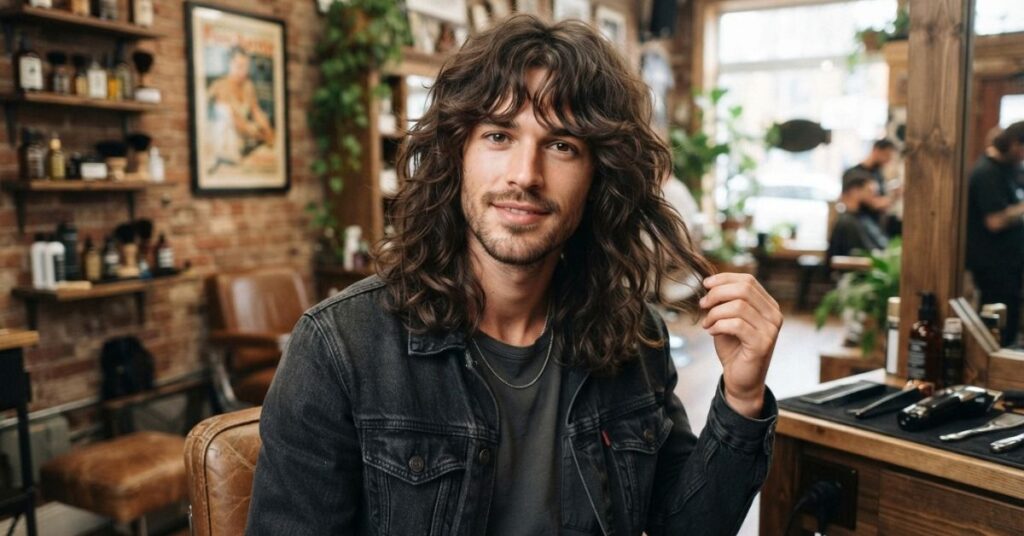
Layers run to the shoulders, with feathered pieces around the face. The layering stops long hair from falling into a flat triangle. You need decent density to carry it, because fine hair can look stringy below the collar. Use sea salt spray and let it dry naturally.
6. Shaggy Fade Haircut
A low or mid fade tightens the sides while the top stays choppy. You get a sharp outline and a relaxed crown. It suits most face shapes and is one of the most requested shaggy haircuts for men in barbershops. Light clay on the top is enough.
7. Shag with Taper
Layers stay full through the crown, then shrink gradually around the ears and neckline. The taper keeps the cut neat for conservative workplaces. Add texture powder at the roots for lift. The tapered edges do the rest.
8. Curly Shag
Rounded, graduated layers stop curls from stacking into a pyramid. Weight is removed from inside, so curls spring evenly from crown to nape. Ask for a dry cut, because curls shrink when they dry. Apply curl cream to damp hair and diffuse on low heat.
9. Wavy Shag
Layers free the wave from its own weight, and the wave adds body to the layers. That is why many barbers call this the best hair match. Oval and heart faces look especially balanced. Mist damp hair with sea salt spray, scrunch upward and leave it alone.
10. Shag Haircut for Straight Hair
Straight hair depends entirely on technique. Razor work and deep point cutting separate the ends so the layers show. Without them, the cut collapses into a flat curtain. Blow-dry with your fingers, then add texture powder at the roots and matte paste at the tips.
11. Choppy Shag
Sharp, stepped layers stack in visible pieces. The mood is punk and bold. It works best on medium to thick hair and flatters diamond and heart faces. Work medium-hold matte clay through dry hair and pinch the ends for definition.
12. Textured Shag
The top should look broken up, never like one solid block. Avoid shine here, because gloss makes this cut look greasy. It suits oval and square faces. Air dry, then pinch the pieces apart with a pea-sized amount of clay.
Read More : Low Fade vs Mid Fade vs High Fade: What’s The Difference?
13. Messy Shag
The mess is planned. Layers point in mixed directions, but the cut underneath is precise. That precision keeps the shape flattering even when it looks slept-in. Round and square faces suit it well. Shake it out after a towel dry and use dry texture spray only if you need grip.
14. Shaggy Mullet
Choppy layers run through the whole cut, so the longer back connects to the top. It softens the hard contrast of a classic mullet. It suits oval and square faces and works well for younger men who want a retro edge. Use matte paste on the top and fringe.
15. Shaggy Wolf Cut

Short, airy layers sit on the crown while the back runs longer. The contrast gives it a wild shape. Oval and diamond faces carry it best, and thick, wavy hair suits it. Blow-dry the crown upside down for lift, then define the ends with light texture spray.
16. Curtain Shag
A center part sends the fringe down each side of the face. It lengthens round and square faces and softens a high forehead. Blow-dry the front away from the part with a round brush. A little leave-in conditioner gives soft hold.
17. Korean Shag
Soft, even waves are built into the layers for airy volume. It gives straight, dense hair the bend it needs. The fringe stays full but slightly see-through. Oval, heart and diamond faces suit it. Use light cream on damp hair and air dry.
18. 70s Rock Shag
This one revives the full vintage look. Expect dramatic feathering, a brow-length fringe and a rounded crown. Layers sit shorter and denser on top than in modern versions. Blow-dry upside down for height, shake it into place and resist combing it neat.
19. Shag with Bangs
A heavy but broken fringe lands at the brow while shorter layers move through the rest. The texture keeps the bangs from looking like a solid curtain. It works on straight, wavy and thick hair. Blow-dry the fringe forward and define it with light paste.
20. Shag with Beard
A loose, layered top pairs well with a structured beard. The beard adds jaw definition and keeps the overall look masculine. Round and oval faces benefit most. Blend the sideburns into the beard so they do not read as separate zones. Use beard oil daily.
21. Thick Hair Shag
Dense hair needs weight removed deep inside the cut. Without it, thick hair balloons outward at shag length. Ask for interior weight removal, not thinning shears on the surface. Surface thinning leads to frizz and puffiness within days.
22. Fine Hair Shag
Fine hair does best with longer, softer layers and little thinning. Shorter crown layers add lift at the root. Over-layering exposes the scalp, so tell your barber about your density first. Blow-dry head down and use volumizing spray at the roots.
23. Surfer Shag
This is the beach look: tousled layers, loose fringe and sun-lightened ends. Choppy cutting and salt spray recreate the ocean effect. Spray damp hair, air dry fully and rough it up once with your fingers.
24. Shaggy Crop
It borrows the compact frame of a French crop and roughens it. The blunt fringe becomes broken and textured, and the sides stay scissor-soft instead of faded. It suits square and oval faces and is among the lowest-effort shags. Use small pinches of matte clay.
25. Shaggy Undercut
Tight sides meet a full, layered top. The contrast looks sharp in casual or semi-formal settings. The top must blend into the sides through a gradual transition. If the top is long and the sides are bare, it looks like two haircuts. Lift with your fingers and add a little clay.
Shag vs Wolf Cut vs Mullet: What’s the Difference?
The shag spreads layers evenly. The wolf cut loads volume on the crown. The mullet keeps the front short and drops the back.
| Feature | Shag | Wolf Cut | Mullet |
|---|---|---|---|
| Layers | Even all around | Crown-heavy, long back | Short front, long back |
| Shape | Rounded and soft | Wild and top-heavy | Strong front-to-back contrast |
| Best length | Any | Medium to long | Medium to long |
| Best hair | All types | Thick, wavy | Straight, wavy |
| Trim cycle | 6 to 8 weeks | 6 to 8 weeks | 4 to 6 weeks |
| Mood | Relaxed | Bold | Retro |
If you are new to layered cuts, start with a standard shag. You can push toward a wolf cut later.
How to Ask Your Barber for a Shag Haircut?
Name the style, bring a photo and set three length points before the scissors come out.
- Name the style and era. “Modern shag” or “curtain shag” is clearer than “shaggy.”
- Bring a matching photo. Choose someone with your hair type, since the same cut looks different on fine straight hair.
- Set three length anchors. Pick the fringe (brow, eye or cheekbone), the ears (covered, half or bare) and the back (above, at or past the collar).
- Choose your layer style. Soft and blended grows out gracefully. Choppy looks bolder but needs more upkeep.
- Request point cutting. Blunt layers sit like shelves instead of feathers.
Try saying: “I’d like a modern medium shag. Fringe at the eyebrow, ears half covered, back touching the collar. Soft layers, point-cut ends, and weight removed from the inside.”
What Goes Wrong with Shaggy Haircuts?
Most bad shags go wrong in the chair, not in your bathroom.
- Thinning the surface. Sides puff out like cotton within days. Weight should come out from the inside.
- Cutting a blunt fringe. A straight line across the forehead turns a shag into a bowl cut.
- Using shiny product. Gel and pomade make layers look flat and oily. Choose matte.
- Mistaking grown-out hair for a shag. Layers need to be placed on purpose. If you are growing out a buzz cut, book a shaping visit once you have about three inches on top.
- Trimming the fringe too short. A shag fringe lives between brow and lashes. Cutting it neat every few weeks turns it into a generic cut.
- Ignoring your hairline. If your hairline is receding, ask for a soft, forward-falling fringe instead of heavy bangs.
Read More : 28 Best High Fade Haircuts For Men in 2026
How Often Should You Trim a Shag Haircut?
Short shags need a reshape every 4 to 5 weeks, medium shags every 6 to 8 and long shags every 8 to 10.
| Short Shag | Medium Shag | Long Shag | |
|---|---|---|---|
| Full reshape | 4 to 5 weeks | 6 to 8 weeks | 8 to 10 weeks |
| Daily styling | 2 to 3 minutes | 3 to 5 minutes | 5 to 7 minutes |
| Key products | Matte clay, texture powder | Sea salt spray, light cream | Leave-in conditioner, cream |
| Grow-out | Loses shape fast | Softens gradually | Grows out well |
Time for a trim when:
- The fringe falls into your eyes.
- Layers lose definition.
- The sides start to widen.
If only the crown has gone flat, ask for a quick crown refresh.
Daily routine (3 steps):
- Start with damp hair and apply cream or sea salt spray.
- Dry with your fingers or a diffuser on low heat.
- Finish with a pinch of matte clay or paste.
Hair care: Wash two to three times a week with a gentle shampoo and condition every time. Layered ends dry out faster than blunt ones, so use leave-in conditioner twice a week. If you blow-dry often or color your hair, use heat protectant.
FAQs About Shaggy Haircuts for Men
Should you wash your hair before a shag haircut appointment?
Yes. Arrive with clean, product-free hair so your barber can see your true texture and density.
Can a barber fix a bad shag without cutting it all short?
Usually, yes. A barber can rebalance the layers and let thinned or short areas fill in over 4 to 6 weeks.
Does a shag haircut work with glasses?
Yes. Thick frames suit a heavier, textured fringe, while thin frames pair better with a softer, wispier one.
Can you tie a shag back for sports or the gym?
Yes, once it reaches chin length. Use a soft tie or headband, and expect shorter layers to fall loose.
Can you perm straight hair to create shag texture?
Yes. A loose body wave adds natural bend. Get the perm first, then have the shag cut around the new pattern.
Read More : 35 Best Korean Hairstyles for Men In 2026
Conclusion
Shaggy haircuts for men work because the effort happens once, in the chair. Pick the length that fits your routine, match the layers to your hair type and face shape, and give your barber clear anchors. Keep products matte, protect the fringe and book trims before the shape collapses. Get those right and the cut looks relaxed on purpose.

Evan Blake is a hair style writer and contributor at Faxhion Styles. He focuses on researching haircuts, styling ideas, hair trends, and practical grooming topics. His goal is to present clear, useful, and reader friendly information that helps audiences explore different styles and make informed choices for their individual hair needs.