
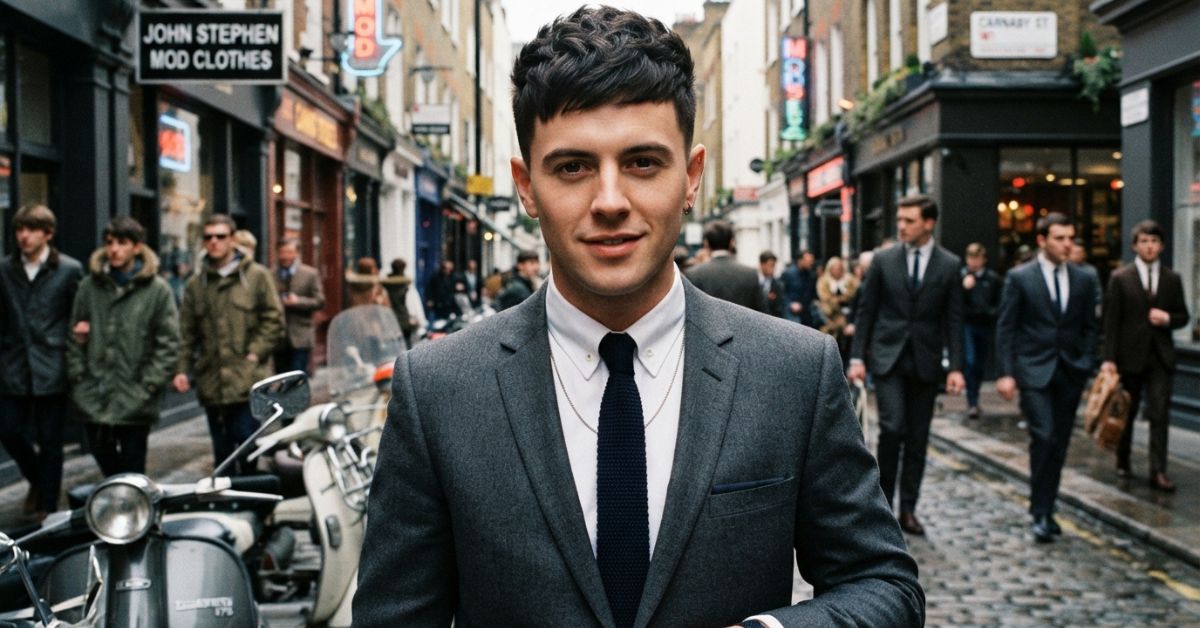
The mod haircuts for men is back, and it looks different from the helmet-like shape you may picture. In 2026, men are moving away from tight skin fades and choosing hair with more texture, softer edges, and natural movement. The mod haircut fits that shift perfectly.
This guide covers 30 mod haircut styles with exact lengths, face shape matches, and styling tips. You will also learn what to tell your barber, who should skip this cut, and how to keep it looking sharp.
Quick answer: A mod haircut is a scissor-cut men’s style from 1960s Britain. It has a structured fringe, layered top, and rounded shape with sides cut to one even length. Most versions sit between 2 and 4 inches on top. Sides are never faded.
What Is a Mod Haircuts for Men?
A mod haircuts for Men is a medium-length style built with scissors. It has three defining features:
- A deliberate fringe that falls forward over the forehead.
- A layered top with enough length to move.
- A rounded silhouette with sides blended at a uniform length.
The cut began in London in the late 1950s. Young “modernists” favoured sharp Italian tailoring and clean grooming. The Beatles brought the mop top version to a worldwide audience in 1963 and 1964. Paul Weller and The Jam sharpened it into a quiff in the late 1970s. Oasis and Liam Gallagher made it heavier and choppier during Britpop in the 1990s.
What separates mod from any other medium-length cut is intent. The fringe is shaped on purpose, and the perimeter is clean. If there is no defined fringe, it is just grown-out hair.
What Are the Best Mod Haircut Styles for Men?
Below are 30 variations. Lengths are approximate and depend on your hair type and what your barber sees on your head.
1. Classic 60s Mod
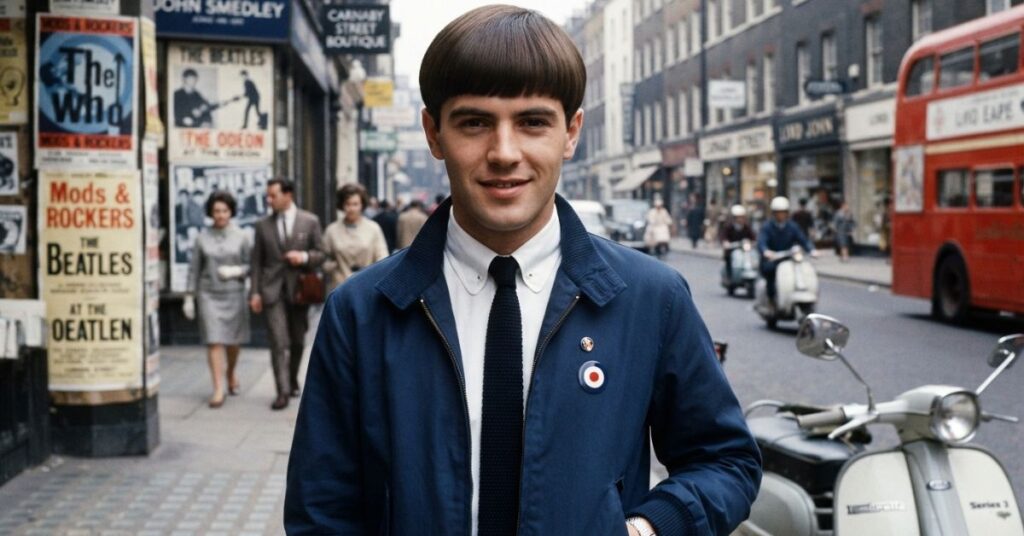
A blunt fringe cut straight across at brow level, with sides around 1.5 to 2 inches and a top near 3 inches. Sideburns sit at mid-ear and are squared off. It looks clean, geometric, and unmistakably retro.
Best for: Oval and oblong faces, straight hair.
Style it: Light pomade combed forward.
2. 90s Britpop Mod
This version is looser and heavier. The fringe sits lower, the layers are choppier, and the sides carry more weight. Think 3.5 to 4 inches on top and 2 to 2.5 inches at the sides, the shape Liam Gallagher made famous.
Best for: Oval and square faces, medium to thick hair.
Style it: Matte cream, finger-styled.
3. Modern Textured Mod
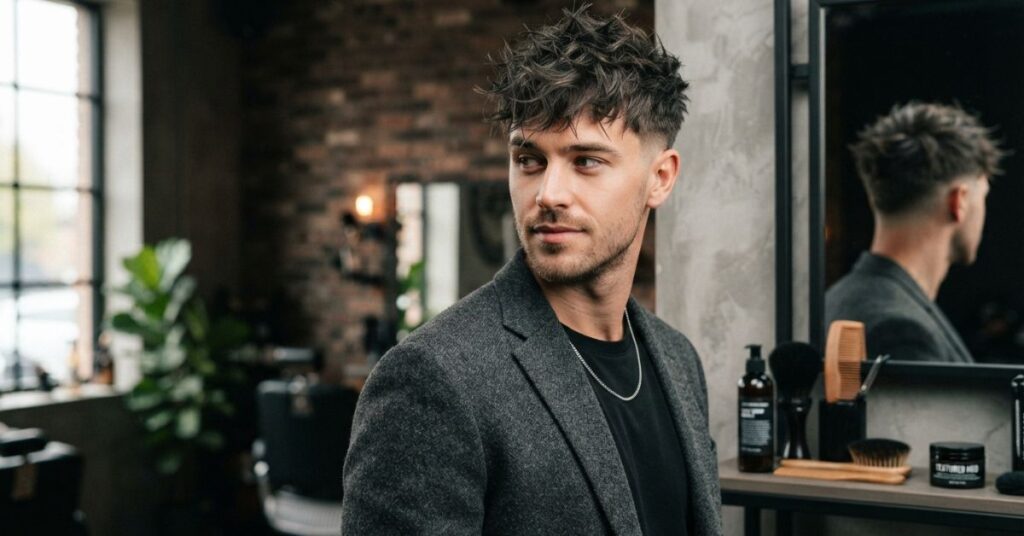
Internal layering breaks up the fringe and crown, so you get movement without rigid geometry. Top at 3 to 4 inches, sides at 2 inches. It forgives different hair densities, which is why many barbers recommend it first.
Best for: All face shapes, medium to thick hair.
Style it: Matte clay on damp hair, blow-dry forward.
4. Short Mod Cut
The fringe sits just above the eyebrows, with a top of 2 to 2.5 inches and sides near 1.5 inches. It keeps the rounded shape but needs less daily effort, and it suits office dress codes.
Best for: All face shapes, fine to medium hair.
Style it: Light cream, no blow dryer.
5. Choppy Mod
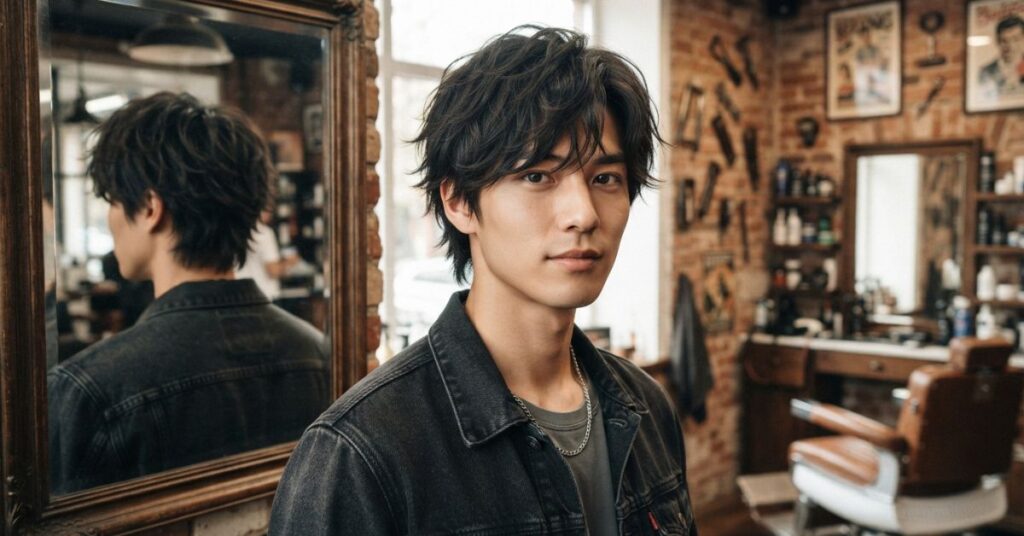
Point cutting makes the fringe fall in pieces instead of one solid line. Top at 3 inches, sides at 2 inches. The choppiness stops thick hair from looking bulky and adds dimension to straight hair.
Best for: Square and diamond faces, thick hair.
Style it: Texture powder at the roots.
6. Messy Mod
The cut underneath stays precise, but the finish is tousled. Top at 3 to 3.5 inches, sides at 2 inches. The mess comes from styling, never from a sloppy cut.
Best for: Oval and heart faces, wavy hair.
Style it: Matte paste, no comb, air dry.
7. Curly Mod
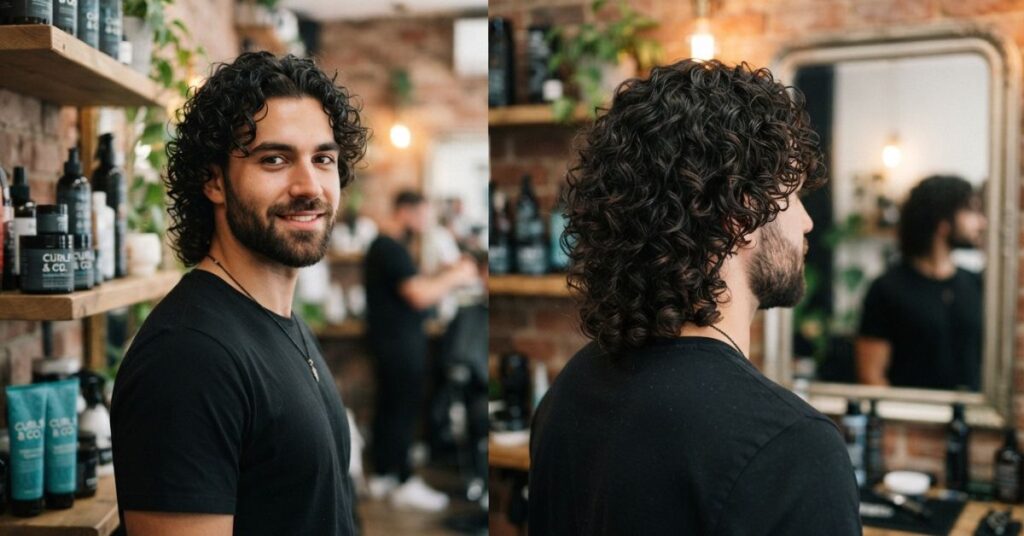
Natural curls replace the straight fringe with a fuller frame. Curls can shrink 20 to 30 percent when dry, so ask for extra length. Aim for about 3.5 to 4 inches wet, which settles near 2.5 to 3 inches dry.
Best for: Oval, heart, and diamond faces, Type 2B to 3B curls.
Style it: Curl cream on wet hair, then air dry or diffuse.
8. Wavy Mod
Waves do much of the shaping work. Top at 3 inches, sides at 2 inches, fringe blended into the top rather than cut blunt. Straight hair needs product to fake this movement, but waves bring it naturally.
Best for: All face shapes, Type 2A to 2C waves.
Style it: Sea salt spray, finger-dry forward.
9. Mod for Straight Hair
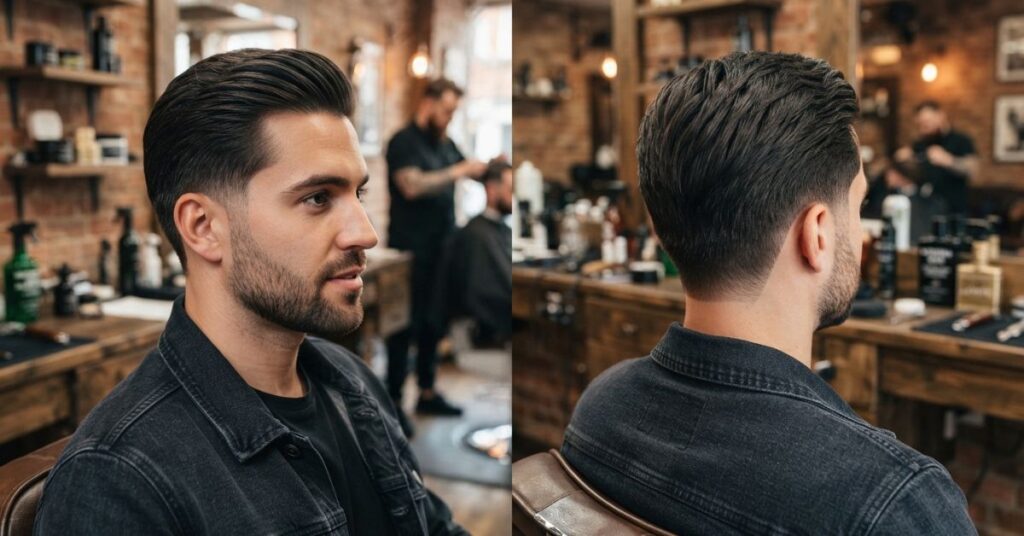
Straight hair shows every mistake, so scissor work matters most here. Invisible internal layering and point cutting add the movement the hair lacks. Top at 3 inches, sides at 2 inches.
Best for: Oval and oblong faces, medium density.
Style it: Round brush blow-dry forward.
10. Long Mod
Fringe past the eyebrows, ear-grazing sides, and a collar-length back. Top at 4 to 5 inches, sides near 3 inches. It sits close to the late-60s mod before hair lengths grew even longer.
Best for: Oval and oblong faces, medium to thick hair.
Style it: Minimal product.
11. Medium Mod

The easiest starting point. Top at 3 inches, sides at 2 inches, fringe at brow level. It grows out predictably and needs little morning effort.
Best for: All face shapes and textures.
Style it: Light cream on damp hair, blow-dry forward.
12. Fluffy Mod
Lifted roots and internal layers create an airy, bouncy crown. Top at 3 to 3.5 inches, sides at 2 inches. Fine hair tends to collapse, so it needs medium to thick density.
Best for: Round and square faces, thick hair.
Style it: Volumizing mousse at the roots.
13. Shaggy Mod
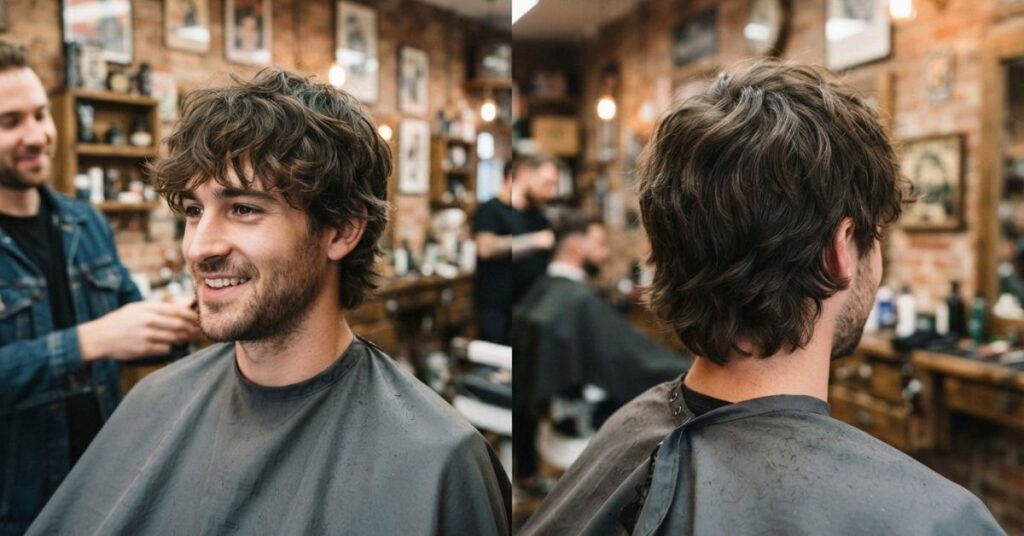
Longer layers and razored ends add weight and texture. Top near 4 inches, sides at 2.5 to 3 inches. It stays mod because it keeps a structured fringe, which a true shag does not have.
Best for: Oval and oblong faces, wavy hair.
Style it: Sea salt spray, scrunch, air dry.
14. Mod Mullet
A clean, structured front with a longer back. Top at 3 to 4 inches, back past the collar, sides scissor-cut at 2 inches. It borrows the mullet’s contrast but keeps the mod’s tidy fringe.
Best for: Oval and oblong faces, straight to wavy hair.
Style it: Matte clay on the front only.
15. Mod Wolf Cut
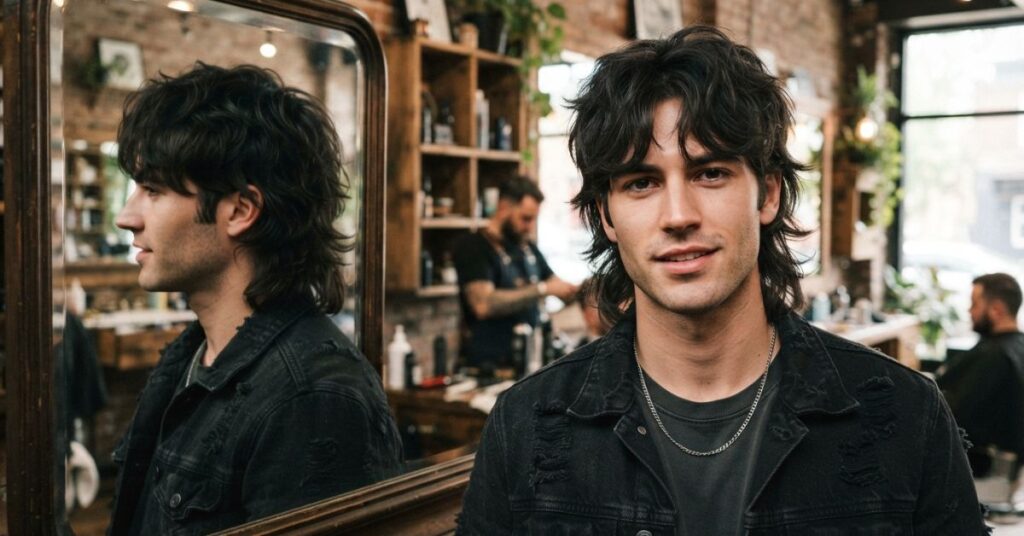
Heavier crown layering, a choppy fringe, and extra back length. Top at 3.5 to 4 inches, sides near 2.5 inches. A mod is structured, while a wolf cut is chaotic, and this sits between them.
Best for: Oval and heart faces, thick wavy or curly hair.
Style it: Texturizing spray, scrunch.
16. Mod Quiff (Paul Weller Style)
The front lifts upward and slightly back. Top at 3 to 4 inches at the front, shorter toward the crown, sides at 1.5 to 2 inches. The height lengthens the face.
Best for: Round and square faces, medium to thick hair.
Style it: Round brush blow-dry upward, medium-hold pomade.
17. Mop Top (Beatles Style)
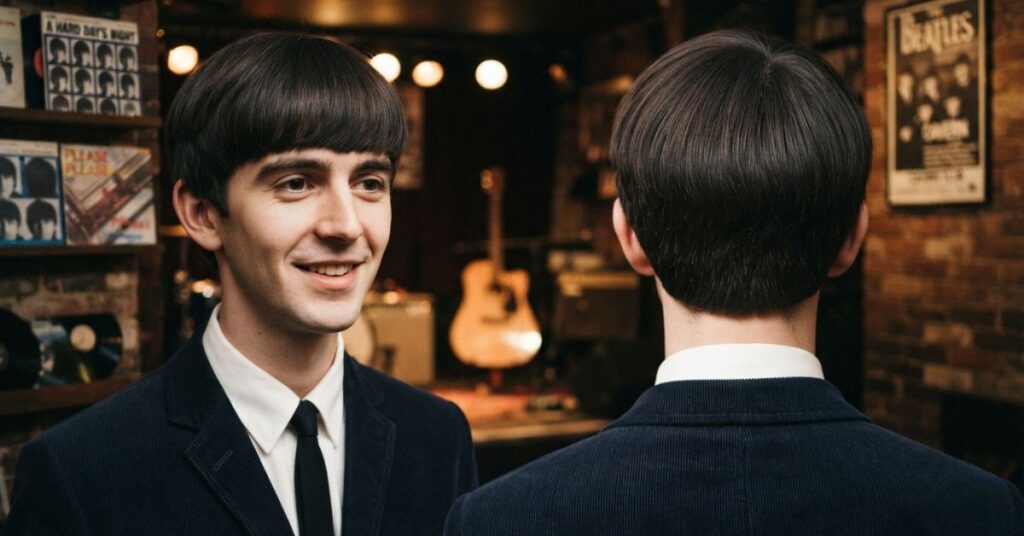
A smooth, full dome with a forward fringe and no visible layers. Top at 3 to 4 inches, sides at 2.5 to 3 inches covering the ears. Sideburns stay short and neat.
Best for: Oval and heart faces, straight hair.
Style it: Light pomade combed forward.
18. Mod French Crop
Short, textured, and fringe-led. Top at 2 to 2.5 inches, sides at 1.5 inches, with a straight fringe just above the brow. The blunt line is the focal point.
Best for: Oval, oblong, and square faces, all densities.
Style it: Matte clay pushed forward.
19. Mod Bowl Cut
A bold, geometric dome with a horizontal fringe all the way round. Top at 3 inches, sides and back at one even length of 2 to 2.5 inches. Keep product minimal so it stays soft, not helmet-like.
Best for: Oval and oblong faces, straight hair.
Style it: Blow-dry downward.
20. Side-Swept Mod
The fringe moves toward your natural part instead of falling straight across. Top at 3 inches, sides at 2 inches. It works best when your hair already wants to go that way.
Best for: All face shapes, straight to wavy hair.
Style it: Blow-dry forward and sideways, matte paste.
21. Mod Flow
No hard fringe line. Ear-grazing hair sweeps back and outward, with a top near 4 inches and sides near 3 inches. The rounded shape and scissor-cut sides keep it in mod territory.
Best for: Oval and square faces, wavy hair.
Style it: Push back damp, add sea salt spray.
22. Mod with Low Taper
Standard mod lengths, with only the last half inch at the neckline and ears tapered. Purists reject any graduation, but many modern barbers offer it as a cleaner compromise. Keep it very subtle.
Best for: All face shapes, office settings.
Style it: Same as any mod.
23. Blonde Mod
Lighter colour makes the layers and strand separation easier to see. Standard mod lengths apply. Plan root touch-ups every five to six weeks, and use a little argan oil on bleached ends.
Best for: All face shapes and textures.
Style it: Lightweight cream.
24. Thick Mod with Waves
Thick, wavy hair needs weight removed from inside the cut, not from the outside edge. Top at 3 to 3.5 inches, sides at 2 inches. Without that, it looks bulky.
Best for: Square and oval faces, thick waves.
Style it: Low-heat blow-dry, matte paste.
25. Spiky Mod
Short, aggressively point-cut layers with lifted tips. Top at 2.5 to 3 inches, sides at 1.5 to 2 inches. It is the most energetic version.
Best for: Round and oval faces, medium density.
Style it: Strong-hold clay, lift from the roots.
26. Textured Messy Mod with Beard
A broken fringe and choppy layers, balanced by a shaped beard. Top at 3 to 3.5 inches, sides at 2 inches. The beard must look groomed, or the whole thing reads as neglected.
Best for: Oval and square faces, full or boxed beards.
Style it: Matte clay scrunched through damp hair.
27. Korean Mod
A wispy, see-through fringe with soft layers and relaxed sides. Top at 3 to 4 inches, sides near 2.5 inches. Thinning shears create the airy effect.
Best for: Oval and heart faces, fine to medium straight hair.
Style it: Soft-hold cream, finger blow-dry.
28. Mod for Fine/Thin Hair
Shape over volume. Top at 2.5 inches, sides at 1.5 inches, with a slightly denser fringe to suggest fullness. Longer versions rarely hold on fine hair.
Best for: All face shapes, fine hair.
Style it: Texture powder at the roots.
29. Edgy Short Mod
The shortest workable mod. Top at 2 inches, sides at 1.5 inches, fringe just above the brow. It nearly styles itself.
Best for: All face shapes and densities.
Style it: Matte clay only when you want definition.
30. Mod with Curtain Fringe
A centre-parted fringe falls to both sides and frames the face. Top at 3.5 to 4 inches at the front, sides at 2 inches. The split softens angular features.
Best for: Square, diamond, and heart faces, straight to wavy hair.
Style it: Blow-dry forward, part with fingers.
Who Should Skip a Mod Haircut?
This cut is not right for everyone. Think twice if any of these apply:
- A receding hairline. A fringe needs front density. Thinning at the temples exposes the recession. A textured crop covers it better.
- Very fine, low-density hair. Only the short versions (#4, #28) work. Longer ones go flat within hours.
- A very round face. A rounded cut adds width. Choose the mod quiff (#16) or fluffy mod (#12) for height.
- No time for upkeep. The fringe loses shape quickly and needs trimming every two to three weeks.
Which Face Shape Works Best with a Mod Cut?
- Oval: Works with almost every version.
- Square: Textured, broken fringes soften strong angles.
- Heart: Fuller fringes balance a wider forehead.
- Oblong: A horizontal fringe shortens the length visually.
- Round: Add height with a quiff or fluffy top, and avoid extra width at the sides.
- Diamond: Textured fringes soften prominent cheekbones.
How Long Does Your Hair Need to Be for a Mod Cut?
Most mods need about 2.5 to 3 inches on top and 1.5 inches at the sides. The shortest versions (#18, #29) can start at about 2 inches, but there is little room to layer.
If you are coming from a buzz cut, expect eight to ten weeks of growth. The sides take longest because they must reach an even scissor-cut length. A simple test: if you cannot pinch the hair between your fingers, it is probably too early.
How Do You Ask Your Barber for a Mod Haircut?
Bring photos from the front and side. Then confirm four details:
- Fringe: blunt, textured, or side-swept, and where it should land.
- Sides: “scissor-cut, no clippers, no fade.”
- Sideburns: mid-ear and defined, or natural.
- Back: rounded and the same length as the sides, or a slight taper at the very bottom.
Sample script: “I would like a scissor-cut mod with a textured fringe at the eyebrows, sides at two inches blended with scissors only, sideburns to mid-ear, and a rounded back.”
How Do You Style a Mod Cut at Home?
Start with damp, towel-dried hair and apply product before drying.
- Textured or choppy cuts: Work in matte clay or paste, then blow-dry forward with your fingers.
- Classic or structured cuts: Use a medium-hold pomade, comb into place, and finish with a round brush on low heat.
- Shaggy or wavy cuts: Apply sea salt spray, scrunch, and air dry.
Style the fringe last, then leave it alone. Constant touching ruins the shape.
What Are the Most Common Mistakes with a Mod Cut?
- Getting a fade by accident. Many barbers default to clippers. Say “scissors only” out loud.
- Skipping fringe trims. Past three weeks, it loses its shape.
- Using heavy product. Strong waxes and high-shine gels flatten movement. Matte clay, light cream, and sea salt spray work better.
- Choosing the wrong version for your density. Fine hair should start with #4 or #28, not #10 or #12.
What Is the Difference Between a Mod Cut and Similar Styles?
| Feature | Mod Cut | Textured Crop | Wolf Cut | Shag | Mullet |
|---|---|---|---|---|---|
| Fringe | Defined, forward | Short, choppy | Choppy, face-framing | Wispy, curtain-like | Short or absent |
| Sides | Scissor-cut, even | Faded or tapered | Layered, longer | Layered, longer | Short, disconnected |
| Back | Rounded, matches sides | Short, tapered | Long, shaggy | Long, layered | Long, flowing |
| Main tool | Scissors | Clippers and scissors | Razor and scissors | Razor and scissors | Clippers and scissors |
The mod keeps one even perimeter. The others rely on contrast or disconnection to create their shape.
How Often Should You Trim a Mod Haircut?
The fringe needs a trim every two to three weeks. Once it falls below the eyebrows, the cut loses its identity.
For full cuts, use this guide:
- Short mods (#4, #18, #29): every three to four weeks.
- Medium mods (#3, #5, #8, #11, #20): every four to five weeks.
- Long and shaggy mods (#10, #13, #21): every five to six weeks.
FAQs
Can a mod cut have a fade?
Not strictly. A mod is scissor-cut, and a fade makes it a different haircut. A subtle low taper (#22) is the closest accepted compromise.
Is a mod cut good for professional settings?
Yes. The short mod (#4), French crop (#18), and edgy short mod (#29) suit most offices. Skip shaggy and messy versions for formal workplaces.
Did the Beatles invent the mod haircut?
No. The mod look existed in London before them. The Beatles popularised the mop top version worldwide in 1963 and 1964.
Can you pair a mod cut with a beard?
Yes. A full or short boxed beard works well, as long as it is neatly groomed (#26).
Does a mod cut work for men over 40?
Yes. The short mod (#4), mod quiff (#16), and classic 60s mod (#1) suit any age. Very long, shaggy versions tend to look younger.
How does a mod cut grow out?
Better than most. Even scissor-cut sides leave no fade line, and the fringe is the first part to lose shape.
What is the easiest mod cut to maintain?
The edgy short mod (#29) and short mod (#4). Both need minimal styling and a fringe trim every few weeks.
Conclusion
The mod haircut rewards precision. Pick the version that matches your hair density, face shape, and daily routine, then bring photos and say “scissors only” to your barber. Keep the fringe trimmed every two to three weeks, use light matte products, and the cut will stay sharp as it grows.
If you are unsure where to begin, start with the medium mod (#11) or modern textured mod (#3). Both are forgiving and easy to adjust.

Evan Blake is a hair style writer and contributor at Faxhion Styles. He focuses on researching haircuts, styling ideas, hair trends, and practical grooming topics. His goal is to present clear, useful, and reader friendly information that helps audiences explore different styles and make informed choices for their individual hair needs.